
Auditory-Visual Synesthesia
Definition and Clinical Features
Auditory-visual synesthesia is a rare neurological phenomenon characterized by the perception of sudden, sound-evoked light flashes. In this cross-modal sensory experience, an auditory stimulus (such as a sudden noise or specific tone) involuntarily triggers a visual sensation. These visual perceptions are often described clinically as noise-induced visual phosphenes or sound-induced photisms.
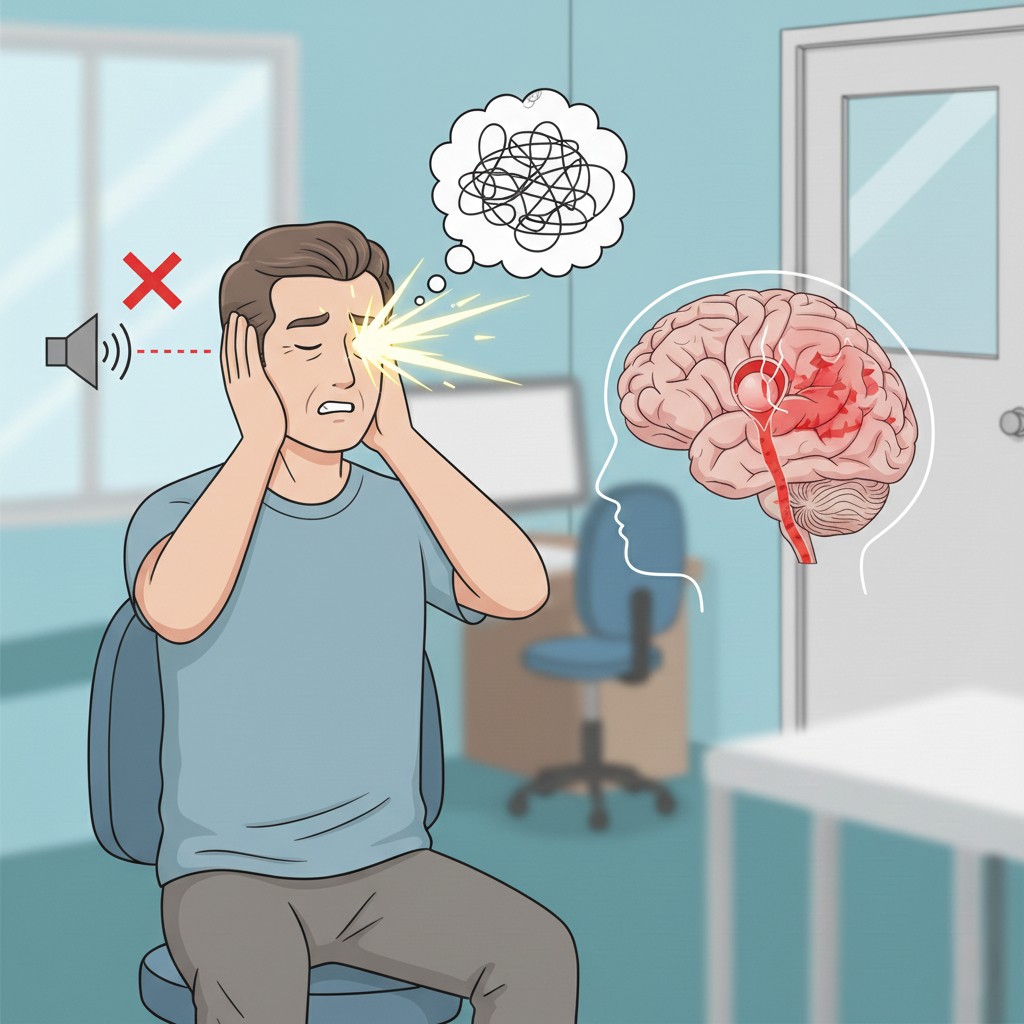
Auditory-visual synesthesia, or sound-induced photisms, involves the perception of sudden light flashes triggered by auditory stimuli, typically occurring in the setting of acquired optic nerve damage.
Pathophysiology and Mechanisms
Unlike developmental or congenital synesthesia, which is a benign, lifelong trait where individuals naturally experience sensory crossovers (e.g., "seeing" colors when hearing music), acquired auditory-visual synesthesia is typically a pathological sign indicating damage to the visual system.
The exact mechanism behind this acquired phenomenon is thought to involve cross-modal neural plasticity or sensory disinhibition. When the optic nerve is damaged (sensory deafferentation), the visual cortex is deprived of its normal, continuous sensory input. This deprivation can lead to cortical hyperexcitability, causing the visual cortex to become abnormally responsive to signals from adjacent sensory modalities, such as the auditory cortex. Another proposed mechanism is ephaptic transmission (abnormal "cross-talk") between demyelinated or damaged nerve fibers.
Associated Conditions
This specific, acquired form of synesthesia is most classically reported in patients with lesions affecting the anterior visual pathways. Common clinical scenarios include:
- Optic Neuritis: Inflammation of the optic nerve, which is frequently associated with demyelinating diseases such as multiple sclerosis (MS). Patients recovering from an acute attack of optic neuritis may report these sound-induced flashes specifically in the affected eye.
- Severe Optic Neuropathy: Ischemic, traumatic, or compressive damage to the optic nerve.
- Visual Loss and Blindness: Patients with acquired severe visual loss may develop various forms of visual hallucinations or photisms (similar to Charles Bonnet syndrome) as the brain attempts to compensate for the loss of visual input, some of which may be triggered by external sounds.
References
Jacobs L, Karpik A, Bozian D, Gothgen S. Auditory-visual synesthesia: sound-induced photisms. Archives of Neurology 1981; 38: 211-216
Cross References
Need Expert Advice on Your Condition?
Get a personalized video breakdown and treatment plan from our senior neurosurgeons using your MRI/CT scans.
👉 Request MRI Review