
Atrophy
Definition and Clinical Features
Atrophy is the progressive wasting, thinning, or decrease in the size of an organ, tissue, or cell that had previously reached normal developmental size. In neurology, the term is most frequently applied to wasted skeletal muscles, presenting clinically as a visible loss of muscle bulk, often accompanied by corresponding weakness.
While muscle atrophy is the most common clinical application, the term can also describe the wasting of other tissues, such as the progressive thinning of the cerebral cortex in neurodegenerative diseases (cortical atrophy) or the loss of subcutaneous fat and connective tissue in the face.
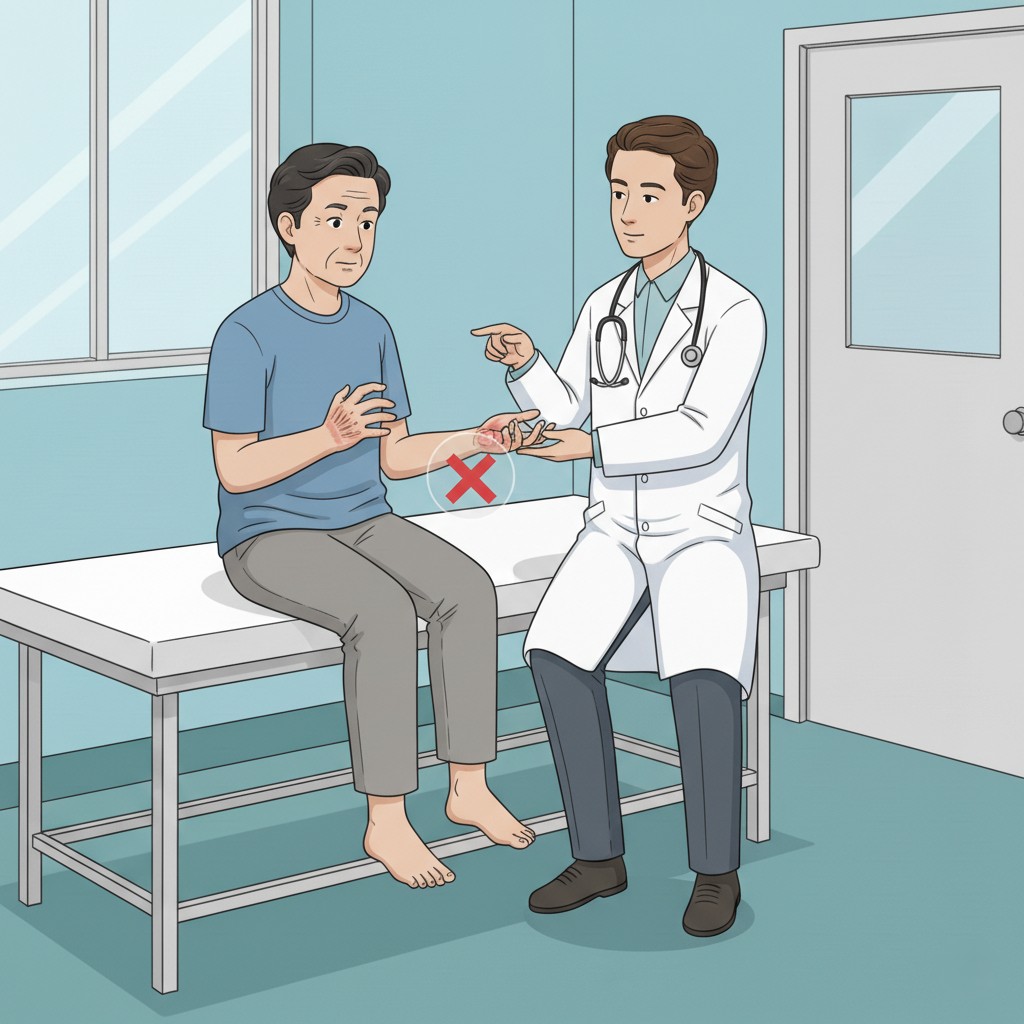
Muscle atrophy resulting from denervation is a hallmark of lower motor neuron disease, often presenting as pronounced wasting of the intrinsic muscles of the hand (such as the thenar and hypothenar eminences).
Pathophysiology and Mechanisms
Muscle atrophy can be broadly categorized based on its underlying physiological or pathological mechanism:
- Neurogenic Atrophy: This occurs due to pathology affecting the lower motor neurons (in which case it may be synonymous with amyotrophy). Damage to the anterior horn cells or the peripheral nerves deprives the muscle of trophic factors. Neurogenic atrophy is characteristically rapid, severe, and frequently accompanied by fasciculations.
- Disuse Atrophy: This results from a lack of physical activity or immobilization (e.g., limb casting, prolonged bed rest, or severe joint pain). Notably, atrophy develops much more quickly and profoundly after lower motor neuron lesions than it does after upper motor neuron lesions, where the mild atrophy seen is primarily due to disuse rather than direct denervation.
- Myopathic Atrophy: Occurs directly from primary muscle diseases (myopathies and muscular dystrophies), where muscle fibers degenerate and are replaced by fat or connective tissue.
Associated Syndromes and False-Localizing Signs
Atrophy is a key feature in numerous neurological syndromes, but its presence must be interpreted carefully:
- Lower Motor Neurone (LMN) Syndrome: Wasting is a defining component, alongside weakness, areflexia, and flaccidity.
- Hemifacial Atrophy: Also known as Parry-Romberg syndrome, this is a rare disorder characterized by the progressive shrinking and degeneration of the skin, soft tissues, and occasionally bone on one half of the face.
- False-Localizing Signs: Muscle atrophy can sometimes manifest remotely from the affected part of the neuraxis. A classic example is the wasting of the intrinsic hand muscles (which are innervated by C8-T1 lower motor neurons) in patients with lesions at the level of the foramen magnum or high cervical cord compression. The mechanism behind this "false-localizing" phenomenon is complex and may relate to venous stasis or traction on the lower cervical roots.
Cross References
Amyotrophy; "False-localizing signs"; Hemifacial atrophy; Lower motor neurone (LMN) syndrome; Wasting
Need Expert Advice on Your Condition?
Get a personalized video breakdown and treatment plan from our senior neurosurgeons using your MRI/CT scans.
👉 Request MRI Review