
Athetosis
Definition and Clinical Features
Athetosis is an involuntary movement disorder clinically characterized by continuous, slow, sinuous, purposeless, and writhing movements. These abnormal movements are typically most evident in the distal parts of the limbs, particularly the hands, fingers, and toes, although they can also affect the face, neck, and tongue.
The movements flow into one another, preventing the patient from maintaining a stable posture. Pure athetosis is relatively rare; it frequently coexists with the more rapid, flowing, and dance-like movements of chorea, resulting in a combined movement disorder appropriately termed choreoathetosis. It also shares a clinical continuum with dystonia, as both involve sustained, twisting muscle contractions.
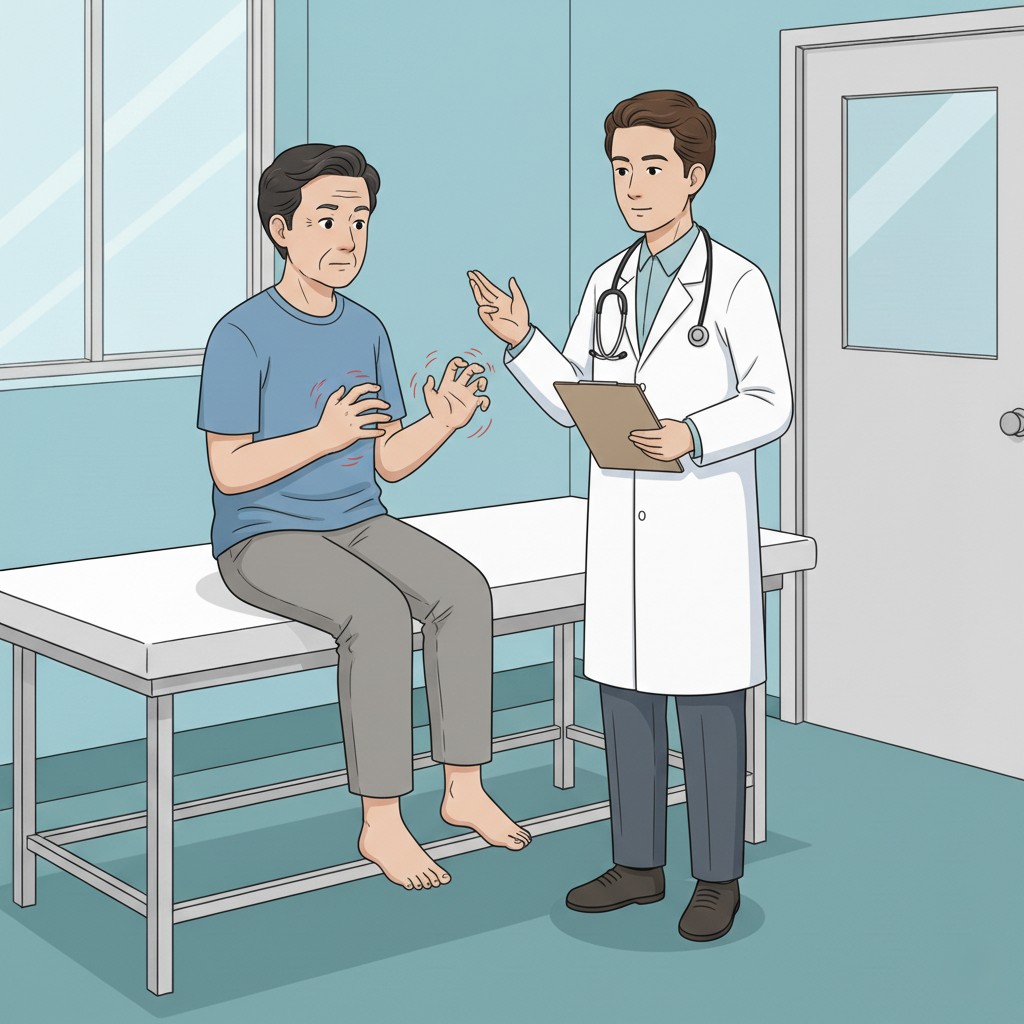
Athetosis is characterized by slow, continuous, writhing movements, most prominently affecting the distal extremities such as the fingers and hands, making it difficult for the patient to maintain a fixed posture.
Pathophysiology and Anatomical Correlates
Choreoathetoid movements primarily result from disorders of the basal ganglia, specifically involving the corpus striatum (the putamen and caudate nucleus). Damage to these deep brain structures disrupts the complex extrapyramidal motor control networks that are responsible for inhibiting unwanted movements and facilitating smooth, coordinated voluntary actions.
Associated Conditions
Today, the isolated term "athetosis" is most frequently used in the context of pediatric neurology to describe "athetoid cerebral palsy" (also known as dyskinetic cerebral palsy). Common etiologies for athetoid movements include:
- Perinatal Brain Injury: Hypoxic-ischemic encephalopathy or severe neonatal hyperbilirubinemia (kernicterus) damaging the basal ganglia.
- Neurodegenerative Diseases: Such as Huntington's disease (where chorea usually predominates, but athetosis may be present) and Wilson's disease.
- Drug-Induced Dyskinesias: Side effects from prolonged use of dopaminergic medications (e.g., levodopa in Parkinson's disease) or neuroleptics.
- Vascular Lesions: Stroke or hemorrhage affecting the striatum or thalamus.
Differential Diagnosis
It is clinically crucial to differentiate true basal ganglia athetosis from pseudoathetosis (or pseudochoreoathetosis).
Pseudoathetosis refers to athetoid-like, wandering movements of the outstretched hands and fingers that are not caused by a motor system defect, but rather by a profound loss of joint position sense (proprioception). Because the patient's brain does not receive feedback on where their fingers are in space, the fingers drift involuntarily. This phenomenon is a sign of sensory ataxia and is markedly worsened when the patient closes their eyes (removing visual compensation), whereas true athetosis is present regardless of visual input.
References
Pearce JMS. Athetosis and William Alexander Hammond, a founder of American neurology. In: Pearce JMS. Fragments of neurological history. London: Imperial College Press, 2003: 413-416
Cross References
Chorea, Choreoathetosis; Pseudoathetosis; Pseudochoreoathetosis
Need Expert Advice on Your Condition?
Get a personalized video breakdown and treatment plan from our senior neurosurgeons using your MRI/CT scans.
👉 Request MRI Review