
Astasia-Abasia
Definition and Historical Context
Astasia-abasia is a descriptive neurological term denoting the inability to stand (astasia) and the inability to walk (abasia). Historically, the term was most frequently used to describe a seemingly bizarre, often dramatic disorder of gait and posture where a patient is entirely unable to stand or walk, yet demonstrates completely normal leg strength, coordination, and sensation when examined while lying down or sitting in a chair.
Because the term lacks a standardized, universal definition, it has meant different things to different observers over the years. In classic neurology, it was heavily associated with functional (psychogenic or hysterical) neurological symptom disorders.
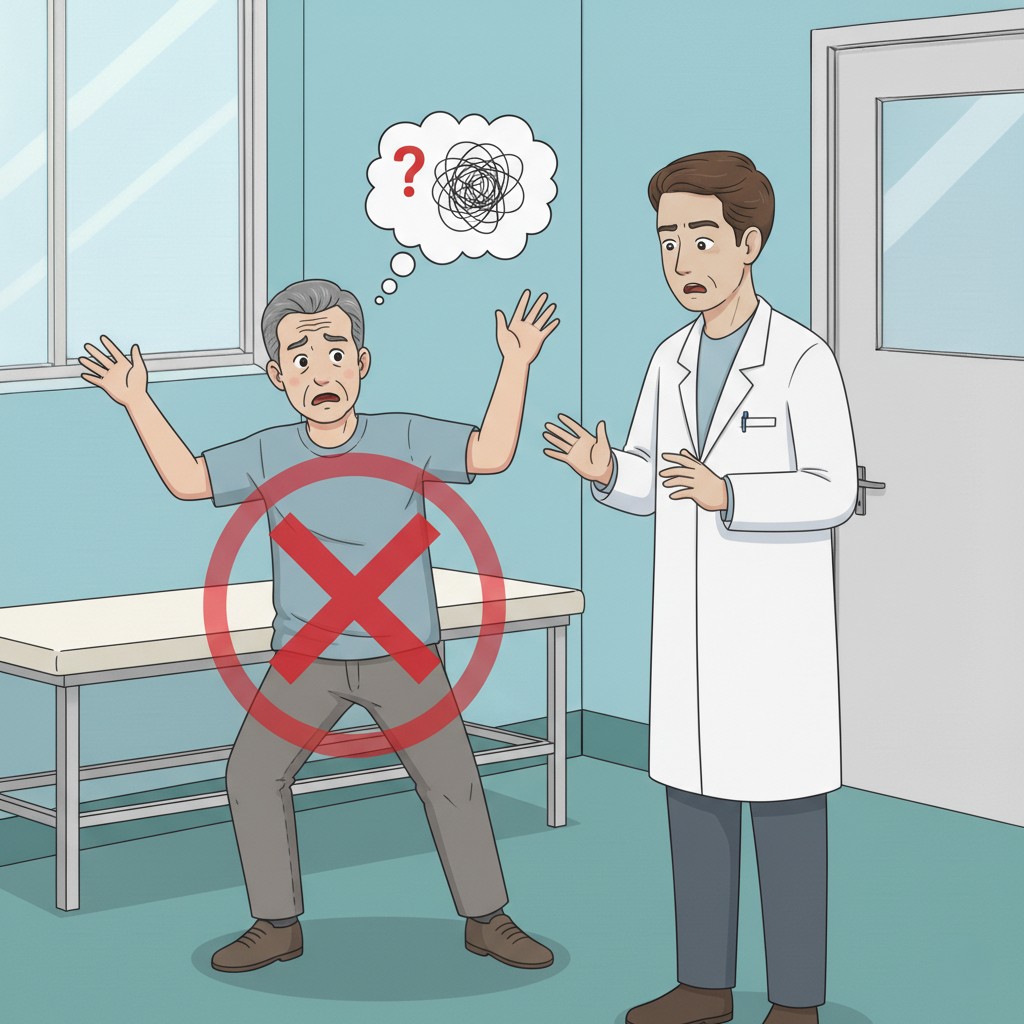
Astasia-abasia describes a profound inability to stand or walk normally, often characterized by bizarre or wildly erratic postural responses despite normal motor strength when supine.
Clinical Features and Modern Classification
In organic (structural) neurological disease, astasia-abasia has been used to describe a higher-level disorder of gait characterized by severe disequilibrium, a wide-based stance, significantly shortened stride length, prominent start or turn hesitation, and gait freezing.
Because of its historical ambiguity, modern clinical classifications of gait disorders tend to avoid the term "astasia-abasia." Instead, these organic presentations are now generally subsumed under more precise categories such as:
- Subcortical disequilibrium: Often seen with basal ganglia disorders or extensive deep white matter ischemia.
- Frontal disequilibrium: Associated with frontal lobe lesions, normal pressure hydrocephalus, or extensive cerebrovascular disease, leading to what is sometimes called "gait apraxia."
Thalamic Astasia
A specific and acute variant known as thalamic astasia is recognized in vascular neurology. It presents as a transient inability to sit or stand upright without falling, despite completely normal limb strength, proprioception, and vestibular function. This is typically observed immediately following an acute stroke (infarction or hemorrhage) affecting the posterolateral thalamus.
Differential Diagnosis
When a patient presents with an inability to stand or walk despite normal strength on bed examination, the clinician must carefully differentiate between:
- Functional (Psychogenic) Gait Disorder: Patients may display highly elaborate, acrobatic, or "near-fall" behaviors, often catching themselves at the last moment without injury. Astasia-abasia remains a classic descriptor for this presentation.
- Gait Apraxia: A true higher-level motor planning deficit where the patient has "forgotten how to walk" (often appearing as if their feet are glued to the floor), typically due to frontal lobe or diffuse white matter disease.
References
Nutt JG, Marsden CD, Thompson PD. Human walking and higher-level gait disorders, particularly in the elderly. Neurology 1993; 43: 268-279
Cross References
Need Expert Advice on Your Condition?
Get a personalized video breakdown and treatment plan from our senior neurosurgeons using your MRI/CT scans.
👉 Request MRI Review