
Aphonia
Definition and Clinical Features
Aphonia is the complete loss of the sound of the voice (phonation). Patients presenting with this condition are unable to produce vocal sounds and must rely on mouthing words or whispering to communicate. Because the articulatory muscles of the mouth, lips, and tongue remain intact, the patient can often whisper with perfect articulation and syntax, distinguishing the condition from language or primary articulation disorders.
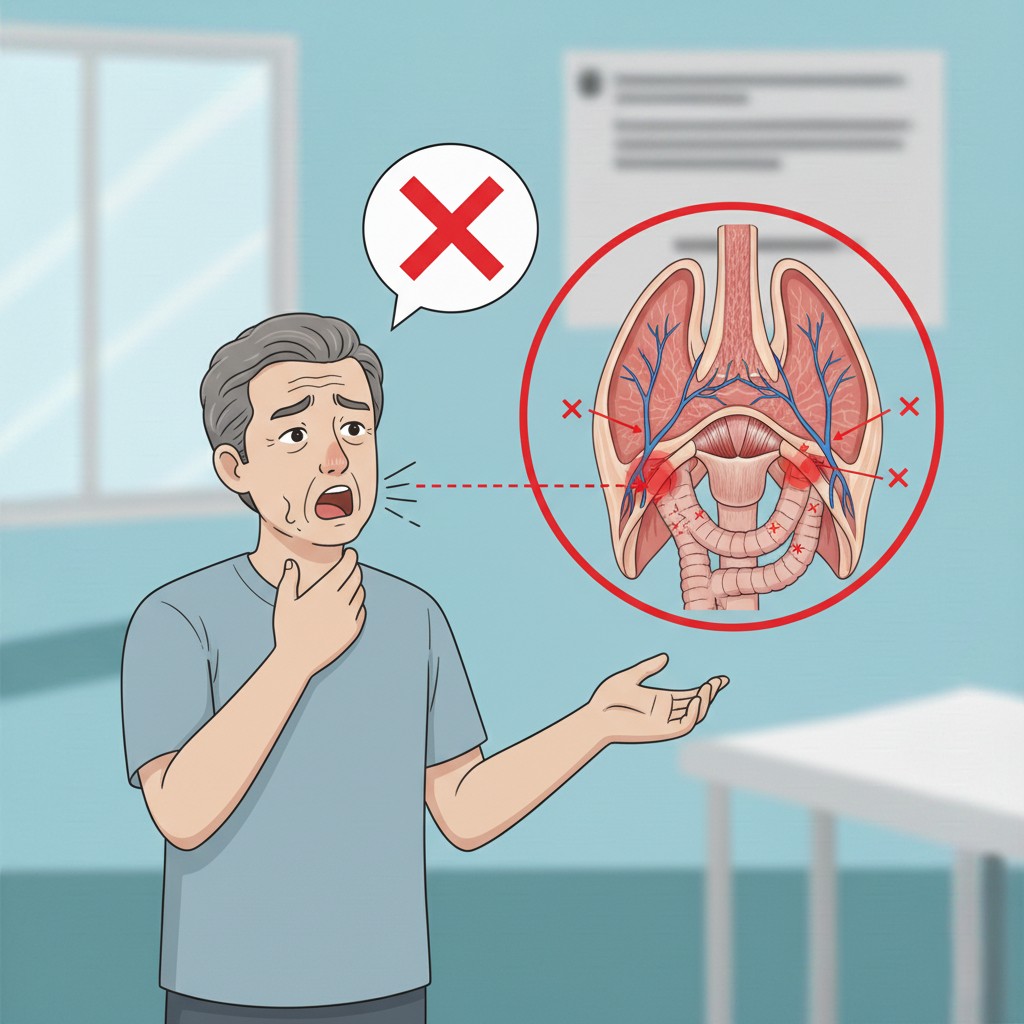
Aphonia, the complete loss of voice, often results from conditions affecting the vocal cords or their innervation via the recurrent laryngeal nerves.
Pathophysiology and Causes
The etiology of aphonia spans structural, neurological, and psychological domains. Common causes include:
- Structural and Inflammatory: Similar to dysphonia (hoarseness or altered voice), acute aphonia most frequently follows severe laryngeal inflammation (laryngitis) or direct trauma to the vocal cords.
- Neurological (Peripheral): A prominent neurological cause is bilateral recurrent laryngeal nerve palsy. Because these branches of the vagus nerve (CN X) supply the intrinsic muscles of the larynx, bilateral damage (often from neck surgery, trauma, or mediastinal tumors) paralyzes the vocal folds, rendering phonation impossible.
- Movement Disorders: Dystonia affecting the abductor muscles of the larynx can cause the vocal folds to inappropriately pull apart during speech. This is known as spasmodic aphonia or abductor laryngeal dystonia. Clinically, it can be diagnosed by asking the patient to speak continuously; the examiner will hear the voice progressively fade away to nothing. Patients frequently report an inability to hold prolonged conversations.
- Psychogenic: Aphonia of a functional or hysterical origin is a well-recognized presentation of functional neurological symptom disorder (conversion disorder), where severe emotional or psychological stress manifests as a physical inability to vocalize, despite anatomically normal vocal cords.
Differential Diagnosis
Proper clinical evaluation requires distinguishing aphonia from other disorders of speech and communication:
- Mutism: In mutism, the patient makes absolutely no effort to speak or communicate verbally, though the anatomical structures for phonation and articulation are intact. In aphonia, the patient actively attempts to speak and can whisper.
- Anarthria: This is a severe motor speech disorder characterized by a complete failure of articulation. The patient may be able to grunt or produce raw vocal sounds (phonation is intact), but they cannot form these sounds into recognizable words.
- Dysphonia: A milder impairment where the voice is hoarse, strained, or altered, but not completely absent.
Cross References
Need Expert Advice on Your Condition?
Get a personalized video breakdown and treatment plan from our senior neurosurgeons using your MRI/CT scans.
👉 Request MRI Review