
Antecollis
Definition and Clinical Presentation
Antecollis (also referred to as anterocollis) is a neurological sign characterized by an involuntary, sustained, and often forceful forward flexion of the neck and head. This abnormal posture is typically driven by dystonia or marked rigidity in the anterior cervical musculature (such as the sternocleidomastoid and scalene muscles). It can cause significant discomfort, impair vision by directing the patient's gaze towards the floor, and interfere with swallowing and speaking.
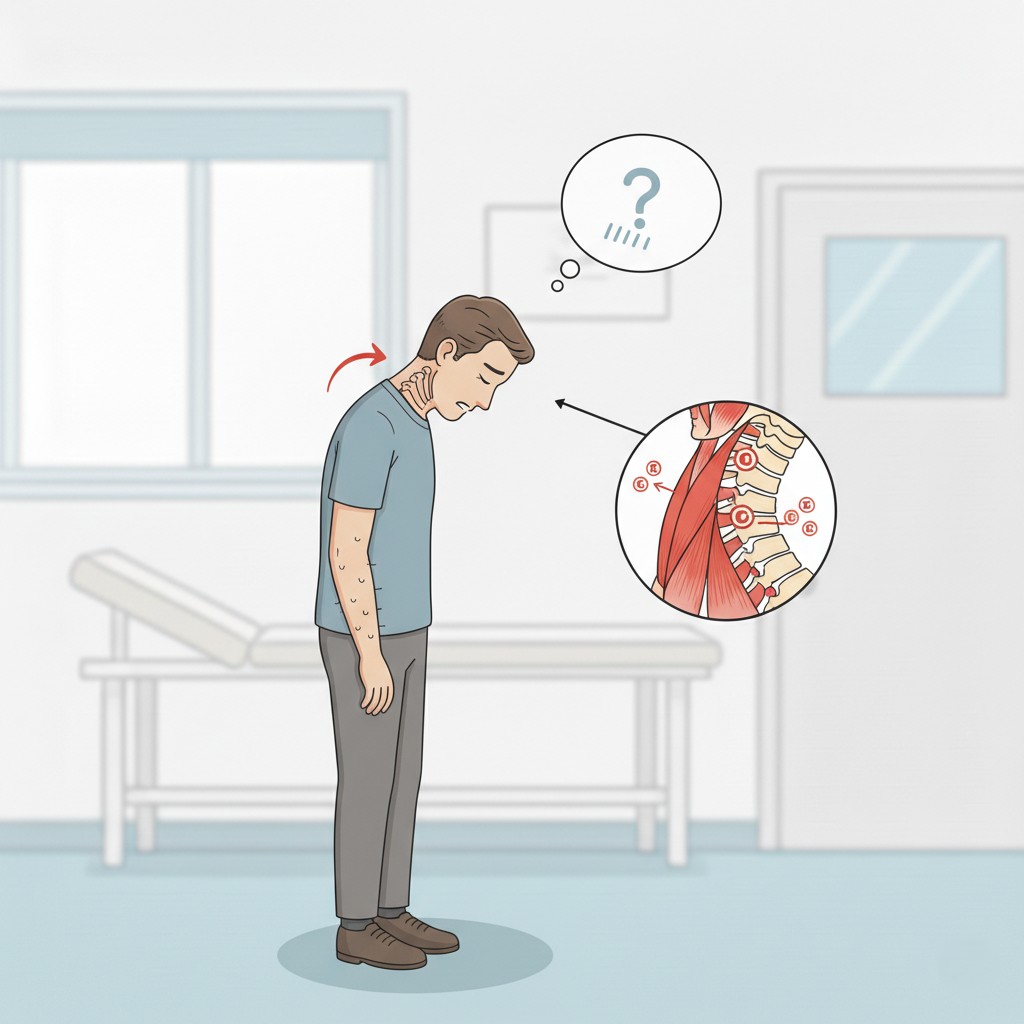
Antecollis is characterized by an involuntary, sustained forward flexion of the neck, often observed as a disabling postural manifestation in atypical parkinsonian syndromes.
Etiology and Associated Conditions
Antecollis is most prominently recognized as a feature of parkinsonian and dystonic disorders:
- Multiple System Atrophy (MSA): Antecollis is highly characteristic of MSA and is considered a red flag warning sign pointing toward this atypical parkinsonian syndrome. This contrasts sharply with retrocollis (backward extension of the neck), which is a hallmark of another atypical parkinsonian condition, Progressive Supranuclear Palsy (PSP).
- Parkinson’s Disease: While less common early on, a sustained dystonic antecollis can develop in advanced idiopathic Parkinson’s disease, sometimes exacerbated by dopaminergic medications or occurring during "off" periods.
- Cervical Dystonia: Although spasmodic torticollis (rotational turning of the head) is the most common form of focal cervical dystonia, isolated pure anterocollis can occur, albeit unusually.
Differential Diagnosis
It is crucial to clinically distinguish true antecollis from Dropped head syndrome.
- Antecollis is fundamentally an active, hyperkinetic, or rigid process involving the overactivity or dystonic contraction of the anterior neck flexors.
- Dropped head syndrome, while producing a similar visual presentation of forward head flexion onto the chest, is typically a paralytic or myopathic phenomenon. It results from the weakness of the posterior neck extensor muscles. It is commonly seen in neuromuscular junction disorders like Myasthenia Gravis, motor neuron diseases like Amyotrophic Lateral Sclerosis (ALS), or inflammatory myopathies (polymyositis). In dropped head syndrome, the head can usually be passively raised without resistance, unlike the rigid or dystonic resistance felt in antecollis.
Cross References
Dropped head syndrome; Retrocollis; Torticollis
Need Expert Advice on Your Condition?
Get a personalized video breakdown and treatment plan from our senior neurosurgeons using your MRI/CT scans.
👉 Request MRI Review