
Anismus
Definition and Clinical Features
Anismus, also known as puborectalis syndrome or dyssynergic defecation, is the paradoxical contraction of the external anal sphincter and puborectalis muscle during attempted defecation. Under normal circumstances, these muscles must relax to allow the passage of stool. In anismus, their inappropriate contraction obstructs the anal canal, leading to severe fecal retention and a primary clinical complaint of chronic constipation.
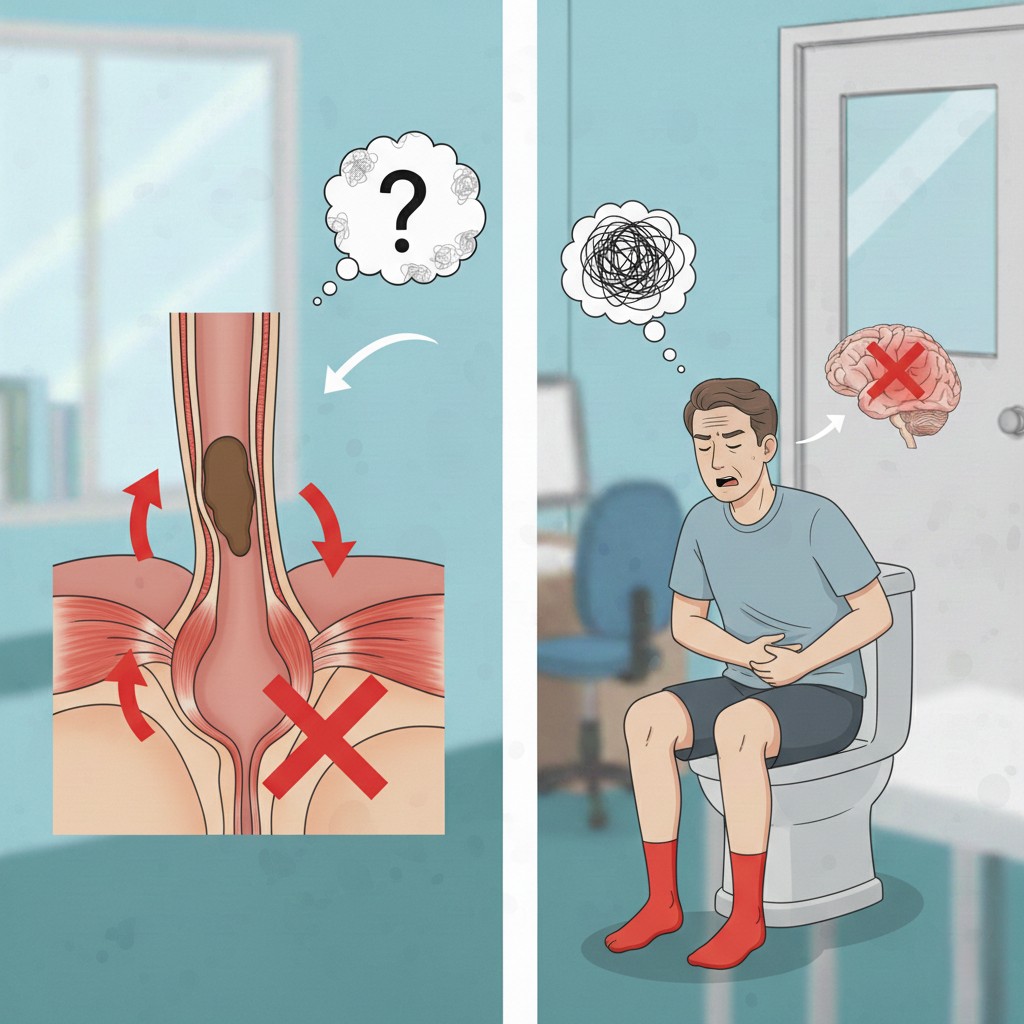
Anismus involves a failure of pelvic floor relaxation, characterized by an involuntary, paradoxical contraction of the external anal sphincter during defecation.
Pathophysiology and Causes
Neurologically, anismus is thought to represent a form of focal dystonia affecting the pelvic floor musculature. This motor control failure can present in two primary ways:
- Idiopathic: It may occur as an isolated, idiopathic condition with no other discernible neurological deficits.
- Secondary to Neurological Disease: It can manifest as a specific complication of movement disorders. Most notably, anismus is a recognized feature of the "off" periods in idiopathic Parkinson’s disease, when dopaminergic medication levels are low and dystonic spasms are more likely to occur.
Treatment and Management
Because anismus functions similarly to a focal dystonia, targeting the overactive muscles is the mainstay of treatment. The condition may be significantly helped by local injections of botulinum toxin into the puborectalis muscle and external anal sphincter. This temporarily paralyzes the hyperactive muscles, breaking the cycle of paradoxical contraction and alleviating the constipation.
References
Jost WH, Muller-Lobeck H, Merkle W. Involuntary contractions of the striated anal sphincters as a cause of constipation: report of a case. Diseases of the Colon and Rectum 1998; 41: 258-260
Cross References
Need Expert Advice on Your Condition?
Get a personalized video breakdown and treatment plan from our senior neurosurgeons using your MRI/CT scans.
👉 Request MRI Review