
Amaurosis
Definition and Clinical Variants
Amaurosis is a general term for visual loss or blindness, with the implication that the cause is not a refractive error or intrinsic disease of the eye's globe. It points to a neurological or vascular cause affecting the visual pathways.
The term is most often encountered in specific clinical contexts:
- Amaurosis Fugax: This refers to a transient, painless, monocular (one-eyed) blindness, often described as a "curtain coming down" over the eye. It is considered an ocular transient ischemic attack (TIA).
- Gaze-Evoked Amaurosis: This is a transient visual loss in one eye that is triggered by specific directions of gaze.
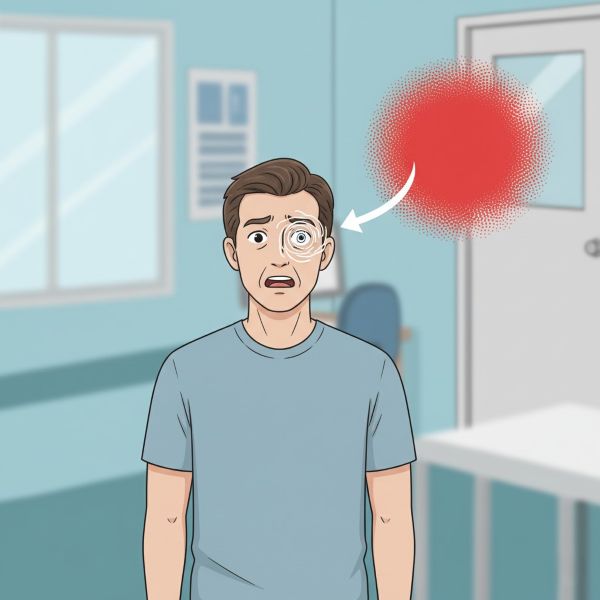
Amaurosis fugax is often caused by a small embolus from an atherosclerotic plaque in the ipsilateral internal carotid artery temporarily blocking the central retinal artery.
Causes and Pathophysiology
The causes of amaurosis depend on the clinical presentation:
- Amaurosis Fugax: The most frequent cause is embolism from an atherosclerotic plaque in the stenotic ipsilateral internal carotid artery. Other recognized causes include giant cell arteritis, systemic lupus erythematosus (SLE), and the antiphospholipid antibody syndrome.
- Gaze-Evoked Amaurosis: This is thought to result from decreased blood flow to the retina due to compression of the central retinal artery during eye movement. It is typically associated with orbital mass lesions, such as tumors or vascular malformations.
Cross References
Amaurosis fugax; Transient Ischemic Attack (TIA); Visual Field Defects
Need Expert Advice on Your Condition?
Get a personalized video breakdown and treatment plan from our senior neurosurgeons using your MRI/CT scans.
👉 Request MRI Review