
Allodynia
Definition and Clinical Features
Allodynia is a type of neuropathic pain where a stimulus that does not normally provoke pain is perceived as painful. This is a positive sensory phenomenon, meaning an abnormal sensation is present. It is distinct from hyperalgesia, which is an exaggerated pain response to a stimulus that is normally painful. For example, in allodynia, the light touch of a cotton swab on the skin can be intensely painful.
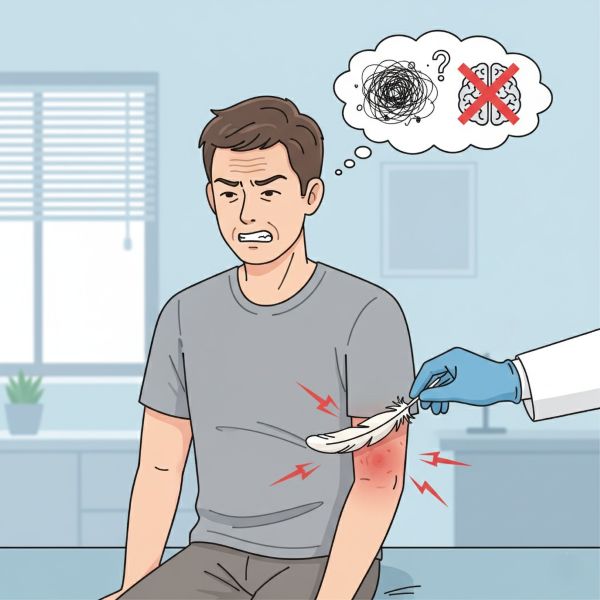
In allodynia, a non-painful stimulus, such as a light touch with a feather or cotton swab, elicits a painful sensation.
Pathophysiology and Causes
Various mechanisms are thought to contribute to allodynia, reflecting an abnormal processing of sensory signals. These include:
- Peripheral Sensitization: Lowered activation thresholds and hyperexcitability of peripheral cutaneous pain fibers (nociceptors).
- Ephaptic Transmission: Abnormal "cross-talk" between large-diameter touch fibers and small-diameter pain fibers.
- Central Sensitization: Altered processing of sensory input within the spinal cord and brain, leading to an amplification of pain signals.
Examples of conditions where allodynia is a feature include the trigger points of trigeminal neuralgia, complex regional pain syndrome (causalgia), and some peripheral neuropathies. Paradoxically, it can also be induced by the prolonged use of opioid medications like morphine.
Treatment
The treatment of allodynia focuses on managing the underlying neuropathic pain. Standard analgesics are often ineffective. Commonly used agents include anticonvulsants (such as carbamazepine, gabapentin, and pregabalin) and antidepressants (like amitriptyline). In some cases, interruption of sympathetic nervous system outflow, for example with regional guanethidine blocks, may provide relief, although relapse can occur.
Cross References
Need Expert Advice on Your Condition?
Get a personalized video breakdown and treatment plan from our senior neurosurgeons using your MRI/CT scans.
👉 Request MRI Review