
Alexithymia
Definition and Clinical Features
Alexithymia, literally "no words for feelings," is a personality trait characterized by a reduced ability to identify, describe, and express one's own emotions. Individuals with alexithymia have difficulty distinguishing between feelings and the bodily sensations of emotional arousal. The condition is typically assessed using psychometric scales, such as the Toronto Alexithymia Scale (TAS-20).
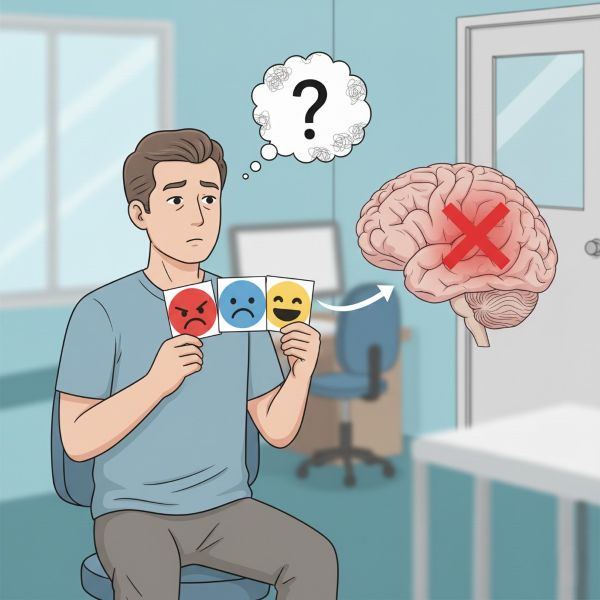
Alexithymia involves a marked difficulty in recognizing and verbalizing one's own emotional states.
Pathophysiology and Clinical Significance
Alexithymia is not a standalone diagnosis but is considered a risk factor that may contribute to a variety of physical and behavioral disorders, including psychosomatic conditions, anxiety, and depression. The inability to process and regulate emotions is thought to be a key mechanism.
Functional imaging studies provide evidence that individuals with alexithymia process emotional stimuli, such as facial expressions, differently from neurotypical individuals. This suggests an underlying neurological basis for the trait, possibly related to altered communication between brain regions involved in emotional awareness and regulation.
References
Kano M, Fukudo S, Gyoba J et al. Specific brain processing of facial expressions in people with alexithymia: an H2(15)O-PET study. Brain 2003; 126: 1474-1484
Cross References
Need Expert Advice on Your Condition?
Get a personalized video breakdown and treatment plan from our senior neurosurgeons using your MRI/CT scans.
👉 Request MRI Review