
Temporal Bone & Internal Auditory Canal CT Scan
What is a Temporal Bone CT Scan?
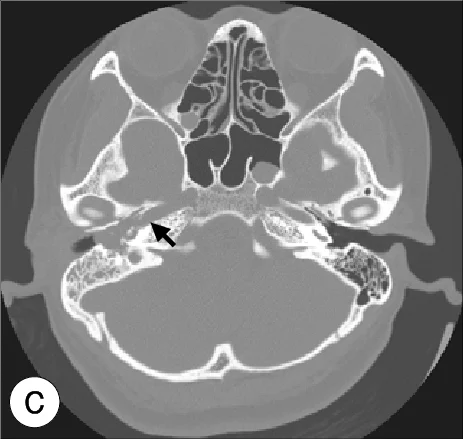
A Temporal Bone Computed Tomography (CT) scan is an ultra-high-resolution imaging protocol specifically designed to evaluate the dense, complex bony structures at the base of the skull, known as the petrous part of the temporal bone. This bone houses the middle ear, the inner ear (cochlea and vestibular system), and the Internal Auditory Canal (IAC).
Because the anatomical structures inside the ear are microscopic (such as the tiny ossicle bones), a standard head CT scan does not provide enough detail. A dedicated temporal bone CT uses extremely thin imaging slices (often less than 1 millimeter) to precisely map the auditory and vestibular neural pathways, making it the gold standard for neuro-otology and skull base neurosurgery.
Clinical Indications
Neurologists, neurosurgeons, and ENT specialists rely on the Temporal Bone / IAC CT scan to diagnose a variety of critical sensory and structural disorders. It is strongly indicated for:
- Conductive and Sensorineural Hearing Loss: To determine if hearing loss is caused by a mechanical blockage (like fluid or bone damage in the middle ear) or nerve damage in the inner ear.
- Severe Vertigo and Balance Disorders: Used alongside Videonystagmography (VNG) to visually inspect the semicircular canals for structural defects causing chronic dizziness or Meniere's disease.
- Acoustic Neuroma (Vestibular Schwannoma): While MRI is typically the primary modality for soft-tissue tumors on the auditory nerve, a CT scan is essential for pre-surgical planning to evaluate how the tumor has eroded or expanded the bony walls of the internal auditory canal.
- Chronic Infections (Mastoiditis, Cholesteatoma): To assess severe infections that have spread from the middle ear into the porous mastoid bone behind the ear, potentially threatening the brain.
- Pulsatile Tinnitus: A specialized "whooshing" sound in the ear that beats with the heart. A CT can detect vascular anomalies or bone thinning over the jugular bulb or carotid artery.
- Trauma and Skull Base Fractures: The definitive test for evaluating longitudinal or transverse fractures through the temporal bone following a severe head injury, which can sever the facial nerve or cause cerebrospinal fluid (CSF) leaks.
Need Expert Advice on Your Condition?
Get a personalized video breakdown and treatment plan from our senior neurosurgeons using your MRI/CT scans.
👉 Request MRI ReviewThe Procedure
A dedicated Temporal Bone CT is a quick, painless exam that usually takes 5–15 minutes. The patient lies still on the CT table while the scanner rotates around the head, acquiring ultra-thin slices (0.5–1 mm) focused on both temporal bones. No contrast is typically required for routine studies, though it may be added in cases of suspected tumor or infection. The patient may be asked to remain completely still.
What the Scan Reveals
The intricate detail provided by a Temporal Bone CT allows specialists to meticulously inspect:
- The Ossicular Chain: The malleus (hammer), incus (anvil), and stapes (stirrup). The scan can detect if these microscopic bones are dislocated by trauma or eroded by cholesteatoma (a destructive skin cyst in the middle ear).
- The Facial Nerve Canal (Fallopian Canal): The bony tunnel protecting Cranial Nerve VII as it travels through the ear. CT imaging is critical for determining if a fracture or tumor is compressing this nerve, causing facial paralysis (Bell's Palsy symptoms).
- The Otic Capsule: The dense bone surrounding the cochlea (hearing organ) and the labyrinth (balance organ). The scan detects otosclerosis or abnormal thinning of the bone (Superior Semicircular Canal Dehiscence), a condition where loud noises can trigger severe dizziness.
- The Tegmen Tympani: The thin paper-like roof of the middle ear separating it from the brain. A defect here can lead to a dangerous brain infection or CSF leak.
- Internal Auditory Canal (IAC): Size, shape, and bony erosion related to tumors or other pathologies.
Advantages and Limitations
Advantages:
- Best modality for high-resolution bony detail of the ear structures.
- Fast, widely available, and excellent for trauma and surgical planning.
- Minimal motion artifacts due to short scan time.
- Superior to MRI for visualizing tiny ossicles and bony dehiscences.
Limitations:
- Uses ionizing radiation (though focused on a small area).
- Limited soft tissue contrast compared to MRI (tumors on the auditory nerve are better seen on MRI).
- May require complementary MRI for complete evaluation of nerves and soft tissues.
Patient Preparation and Safety
Preparation:
- No special preparation or fasting is usually required.
- Remove earrings, hearing aids, or any metal near the ears.
- Inform the staff if you are pregnant or have had a previous contrast reaction (if contrast is planned).
Safety: The radiation dose is low because the scan is limited to the temporal bones. Modern dose-reduction techniques are used. The test is non-invasive and generally very safe.
References
- Juliano AF, Johnson MH, Ishii M. High-resolution CT of the temporal bone. Semin Ultrasound CT MR. 2013;34(6):536-558.
- Stone JA, Chakeres DW, Schmalbrock P. High-resolution MR imaging of the internal auditory canal and cerebellopontine angle. Radiographics. 1998;18(5):1061-1076.
- Casselman JW, Offeciers EF, De Foer B, et al. CT and MR imaging of the inner ear. Eur Radiol. 2001;11(4):618-626.
- Additional sources: American Society of Neuroradiology and recent temporal bone imaging guidelines (2023–2026).
See also
- Abdominal CT scan
- Brain and skull base CT scan
- Brain Perfusion CT scan
- Cerebrovascular CT-angiography
- Coronary CT-angiography and computed tomography of the heart
- CT Myelography
- CT study principle
- CT Venography (CTV) of the Brain
- Paranasal sinuses CT scan
- Pelvic CT scan
- Temporal Bone / Internal Auditory Canal CT scan
- Thorax (chest) CT scan
- Vertebral spine CT scan (Overview)
Need Expert Advice on Your Condition?
Get a personalized video breakdown and treatment plan from our senior neurosurgeons using your MRI/CT scans.
👉 Request MRI Review