
CT Myelography (Myelogram)
What is CT Myelography?
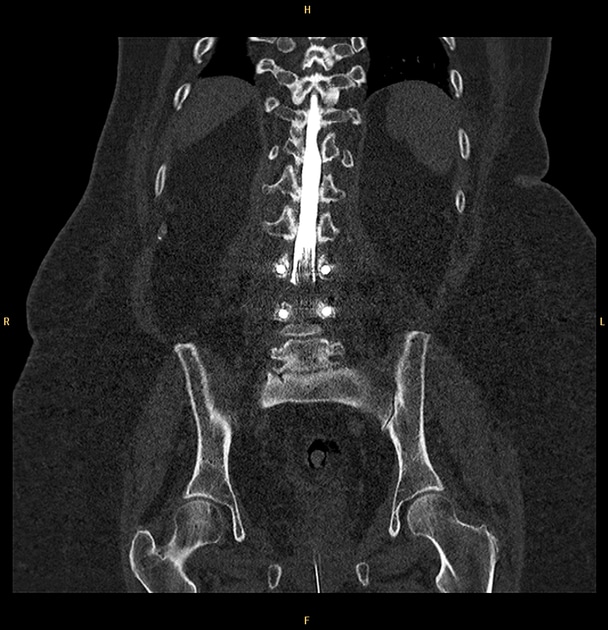
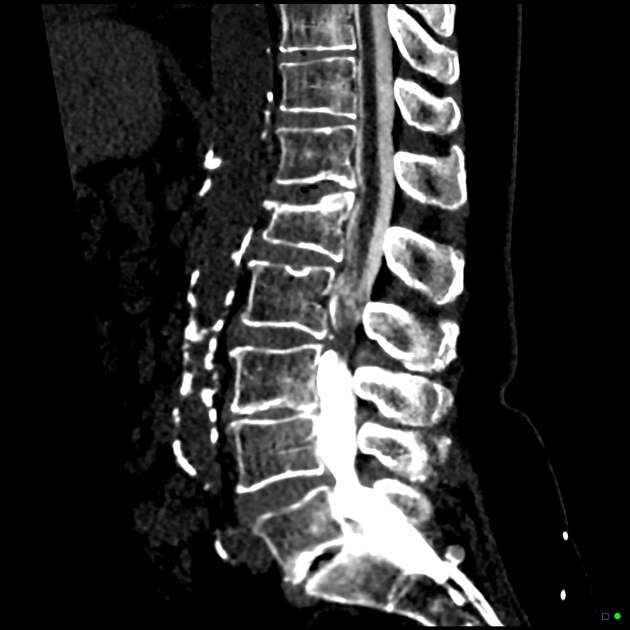
CT Myelography is an advanced diagnostic imaging procedure that combines a standard Computed Tomography (CT) scan with the injection of a liquid contrast medium (dye) directly into the spinal canal (the subarachnoid space containing cerebrospinal fluid).
While a standard CT scan is excellent for visualizing bones, it struggles to clearly define soft tissues like the spinal cord and individual nerve roots. By injecting contrast dye, the spinal fluid "lights up" brightly on the CT scan. This creates a perfect silhouette (outline) of the spinal cord and nerve roots, instantly revealing if a herniated disc, bone spur, or tumor is pressing against them.
Clinical Indications for CT Myelography
Today, Magnetic Resonance Imaging (MRI) is usually the first choice for evaluating soft tissue in the spine. However, CT Myelography remains the absolute gold standard and is crucially indicated when:
- MRI is Contraindicated: The most common reason for a CT myelogram is if the patient has a cardiac pacemaker, cochlear implant, or other metallic devices that make an MRI impossible or highly dangerous.
- Severe Surgical Artifacts: If a patient has previously undergone spinal fusion surgery with extensive titanium rods and screws, an MRI will produce massive "artifacts" (blurry black holes) that obscure the nerves. A CT myelogram bypasses these artifacts, allowing the surgeon to see if a nerve is being pinched next to the hardware.
- Multi-Level Spinal Stenosis: In complex cases where bone spurs and thickened ligaments are squeezing the spinal canal from multiple directions, the dye from a myelogram perfectly outlines the remaining space, guiding the surgeon's exact surgical plan.
- Cerebrospinal Fluid (CSF) Leaks: It is highly effective at finding tears in the dura mater (the protective sac around the spinal cord) by showing exactly where the contrast dye is leaking out into the surrounding tissues.
- Equivocal MRI Findings or Pre-Surgical Planning: For detailed mapping before complex spine surgery.
Need Expert Advice on Your Condition?
Get a personalized video breakdown and treatment plan from our senior neurosurgeons using your MRI/CT scans.
👉 Request MRI ReviewThe Procedure: How it Works
A CT myelogram is performed in two distinct steps, usually taking about 45–90 minutes:
- The Injection (Lumbar Puncture): The patient lies on their stomach or side on a fluoroscopy table. The area is numbed with local anesthetic. Under real-time X-ray guidance, a thin needle is inserted into the lower back into the subarachnoid space. A non-ionic contrast dye is slowly injected.
- The CT Scan: Immediately afterward, the patient is transferred to the CT scanner. Positioning maneuvers (tilting the table or patient) help distribute the contrast to the area of interest (cervical, thoracic, or lumbar). High-resolution images are then acquired.
After the procedure, patients are monitored for a few hours.
Interpretation of Results
Radiologists and neurosurgeons analyze the flow and distribution of contrast to identify:
- Nerve Root Compression: Filling defects or cutoff of contrast around compressed nerve roots (e.g., due to disc herniation or foraminal stenosis).
- Spinal Canal Stenosis: Narrowing of the thecal sac with characteristic "hourglass" appearance.
- Blockage or Complete Obstruction: Complete cutoff of contrast flow, often seen in severe stenosis or tumors.
- CSF Leaks: Extravasation of contrast outside the spinal canal.
- Post-Surgical Issues: Scar tissue (epidural fibrosis) versus recurrent disc herniation.
These findings are often correlated with clinical symptoms to guide conservative treatment or surgical intervention.
Advantages and Limitations
Advantages:
- Excellent visualization of nerve roots and thecal sac when MRI is not possible.
- Superior to MRI in the presence of metallic hardware (minimal artifact).
- Dynamic information about contrast flow and potential CSF leaks.
- High spatial resolution for bony and contrast interfaces.
Limitations:
- Invasive procedure (requires lumbar puncture) with small risk of complications.
- Uses ionizing radiation and iodinated contrast (allergy or kidney risk).
- Less detailed soft tissue information than MRI in patients who can undergo MRI.
- Post-procedure headache is relatively common.
Patient Preparation and Aftercare
Preparation:
- Fasting for 4–6 hours before the procedure (especially if sedation is used).
- Inform the doctor about allergies to contrast, bleeding disorders, or medications (e.g., blood thinners).
- Blood tests may be required to check kidney function and clotting.
Aftercare: Lie flat for 4–8 hours to reduce the risk of post-dural puncture headache. Drink plenty of fluids. Avoid heavy lifting or strenuous activity for 24 hours. Mild headache, nausea, or back pain may occur but usually resolve. Contact the doctor if severe headache, fever, or neurological changes appear.
References
- Sandhu FA, Royster RM, Tsai JC, et al. CT myelography: clinical indications and imaging findings. Radiographics. 2011;31(7):1927-1940.
- Daffner RH, Hackney DB. ACR Appropriateness Criteria on suspected spine trauma. J Am Coll Radiol. 2007;4(11):762-775.
- Boden SD, Davis DO, Dina TS, et al. Contrast-enhanced MR imaging versus tissue-specific interpretation of plain MR images in patients with post-operative lumbar pain. AJR Am J Roentgenol. 1990;154(5):1111-1116.
- Additional sources: American College of Radiology (ACR) Appropriateness Criteria and recent guidelines on spine imaging (2023–2026).
See also
- Abdominal CT scan
- Brain and skull base CT scan
- Brain Perfusion CT scan
- Cerebrovascular CT-angiography
- Coronary CT-angiography and computed tomography of the heart
- CT Myelography
- CT study principle
- CT Venography (CTV) of the Brain
- Paranasal sinuses CT scan
- Pelvic CT scan
- Temporal Bone / Internal Auditory Canal CT scan
- Thorax (chest) CT scan
- Vertebral spine CT scan (Overview)
Need Expert Advice on Your Condition?
Get a personalized video breakdown and treatment plan from our senior neurosurgeons using your MRI/CT scans.
👉 Request MRI Review