
Lumbar-Sacral Spine CT Scan
What is a Lumbar-Sacral Spine CT Scan?
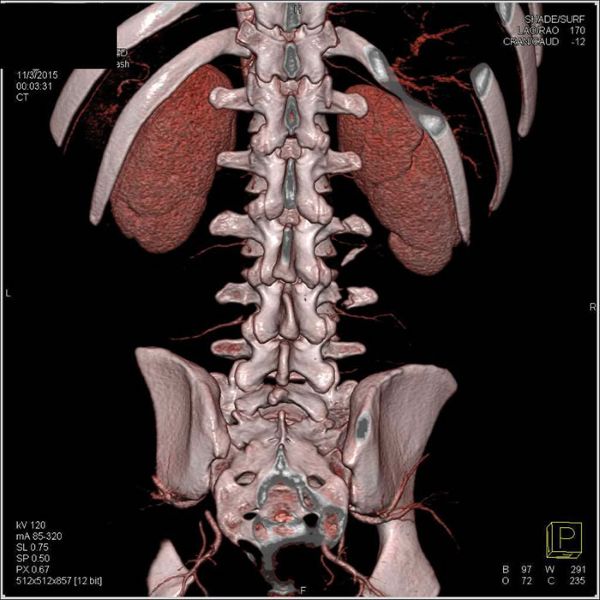
A Computed Tomography (CT) scan of the lumbar-sacral spine is a fast, highly detailed imaging test focusing on the lower back. It captures cross-sectional images of the five lumbar vertebrae (L1-L5), the sacrum (S1-S5), the coccyx (tailbone), and the critical nerve roots that make up the cauda equina.
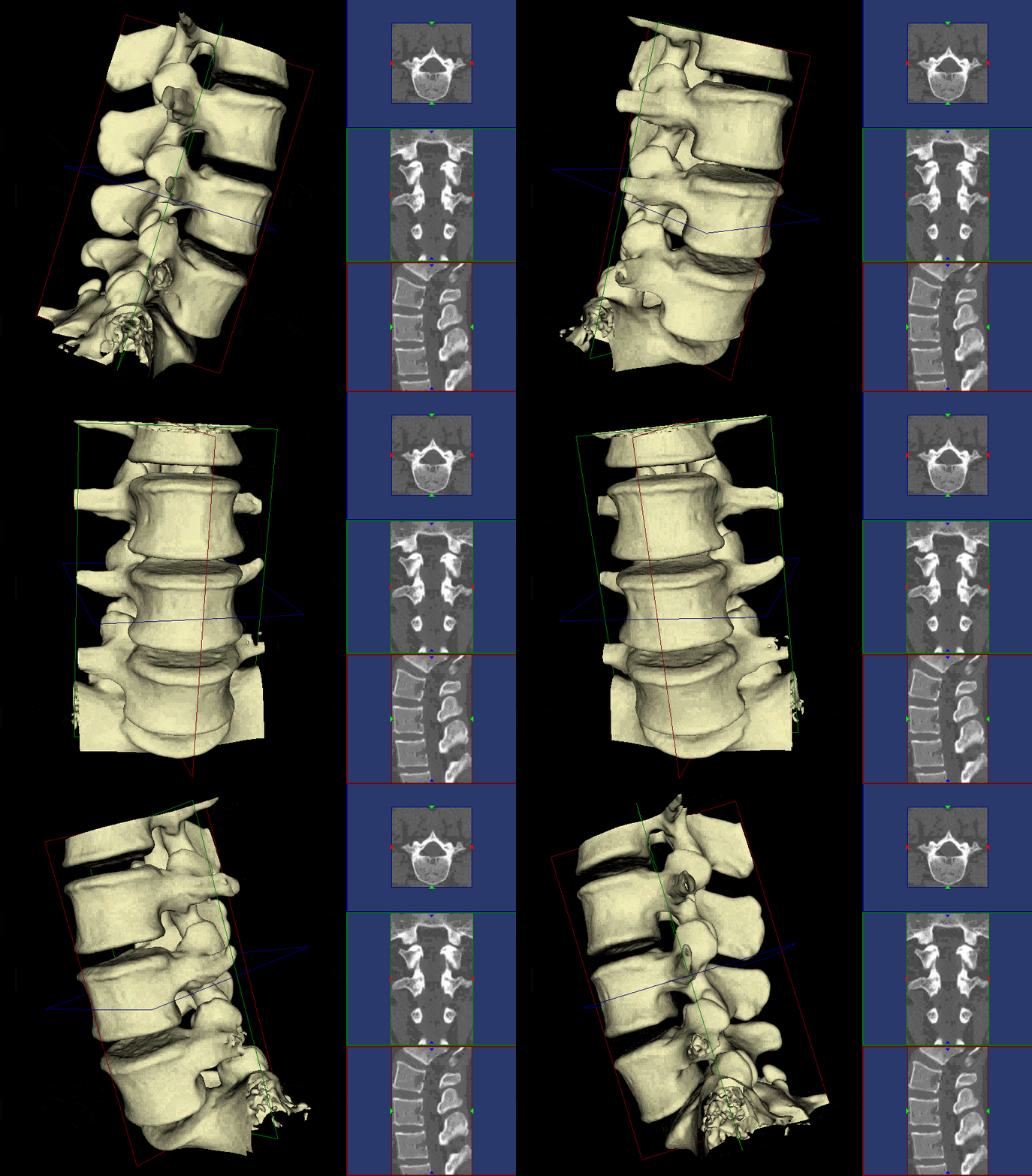
While an MRI is typically preferred for evaluating soft tissues like intervertebral discs and the spinal cord itself, a Lumbar CT is unequivocally superior for visualizing the dense bony architecture of the lower back. It is heavily utilized by orthopedic and neurosurgeons to evaluate structural failures, plan complex spinal fusion surgeries, and assess bone healing post-operation.
Clinical Indications for Lower Back CT
A Lumbar-Sacral CT is ordered to definitively diagnose conditions that are primarily driven by bone or severe calcification:
- Trauma and Compression Fractures: To evaluate the extent of a vertebral body collapse after a fall or lifting injury. It is critical for assessing burst fractures where bone fragments may have pushed backward into the spinal canal.
- Sciatica & Foraminal Stenosis: When severe, shooting pain radiates down the leg, a CT can pinpoint whether the exiting nerve root is being compressed by a calcified herniated disc or by an overgrown bone spur (osteophyte) blocking the exit hole (foramen).
- Spondylolysis (Pars Defect): A common cause of back pain in athletes, this is a stress fracture in the pars interarticularis of the vertebra. CT is the most sensitive test to detect this specific hairline fracture.
- Post-Surgical Evaluation: Because CT handles metallic artifacts much better than MRI, it is the test of choice for evaluating patients who have previously undergone spinal fusion with titanium screws and rods. It confirms if the bone graft has successfully fused (arthrodesis) or if a screw has loosened.
- Spondylolisthesis and Instability: Precise measurement of vertebral slippage and assessment of spinal alignment.
Need Expert Advice on Your Condition?
Get a personalized video breakdown and treatment plan from our senior neurosurgeons using your MRI/CT scans.
👉 Request MRI ReviewThe CT Procedure
A lumbar-sacral spine CT scan is quick and painless, typically taking 5–15 minutes. The patient lies supine on a motorized table that slides into the CT scanner. The technologist may ask the patient to hold their breath briefly or remain completely still. Intravenous contrast is usually not required for standard bony evaluation but may be used when assessing tumors, infection, or postoperative complications.
Modern multidetector CT scanners produce very thin slices (0.5–1 mm) with excellent multiplanar reformats and 3D reconstructions, which are extremely valuable for surgical planning.
Common Findings in the Lumbar Spine
Upon reviewing a Lumbar CT, the specialist looks for structural failures that cause low back pain:
- Spondylolisthesis: The forward slipping of one vertebra over the one below it (most commonly L4 over L5, or L5 over S1). The CT scan allows the surgeon to accurately measure the degree of slippage and assess spinal instability.
- Facet Joint Osteoarthritis: The small stabilizing joints at the back of the spine can become severely arthritic, developing sclerosis (hardening), joint space narrowing, and massive bone spurs that grind against each other during movement.
- Vacuum Phenomenon: The accumulation of nitrogen gas within severely degenerated intervertebral discs. This appears as dark, air-filled clefts on the CT scan and is a hallmark sign of advanced lumbar osteochondrosis.
- Calcified Disc Herniations: While fresh, soft disc herniations are better seen on MRI, old, chronic herniations can calcify (turn into bone). A CT scan precisely maps these hardened masses, which often require different surgical tools (like high-speed drills) to remove safely.
Advantages and Limitations
Advantages:
- Superior bone detail and 3D reconstructions — ideal for trauma, fractures, spondylolysis, and surgical planning.
- Excellent for evaluating metallic spinal hardware with minimal artifact.
- Very fast acquisition time, suitable for patients in pain or unable to lie still for long MRI exams.
- Widely available and effective when MRI is contraindicated.
Limitations:
- Uses ionizing radiation (though significantly reduced with modern protocols).
- Limited soft tissue contrast compared to MRI — less sensitive for early disc herniations, nerve root inflammation, or spinal cord pathology.
- May require contrast for certain infectious or neoplastic conditions.
Patient Preparation and Radiation Safety
Preparation:
- No special fasting is typically required.
- Inform the technologist if you are pregnant, have kidney impairment, or a known allergy to iodinated contrast.
- Remove jewelry, belts, or clothing with metal fasteners from the waist area.
Radiation Safety: A lumbar-sacral CT involves a moderate radiation dose to the pelvis. Current scanners use dose-reduction technologies (iterative reconstruction, automatic exposure control). In cases of trauma, suspected instability, or preoperative planning, the diagnostic benefit clearly outweighs the small risk.
References
- Learch TJ. Imaging of the Lumbar Spine. Radiol Clin North Am. 2007;45(4):607-624.
- Resnick D, Niwayama G. Degenerative disease of the spine. In: Diagnosis of Bone and Joint Disorders. 3rd ed. Philadelphia: Saunders; 1995:1372-1462.
- Modic MT, Obuchowski CE, Ross JS, et al. Acute low back pain and radiculopathy: MR imaging findings and their prognostic role and effect on outcome. Radiology. 2005;237(2):597-604.
- Additional sources: American College of Radiology (ACR) Appropriateness Criteria and recent lumbar spine imaging guidelines (2023–2026).
See also
- Abdominal CT scan
- Brain and skull base CT scan
- Brain Perfusion CT scan
- Cerebrovascular CT-angiography
- Coronary CT-angiography and computed tomography of the heart
- CT Myelography
- CT study principle
- CT Venography (CTV) of the Brain
- Paranasal sinuses CT scan
- Pelvic CT scan
- Temporal Bone / Internal Auditory Canal CT scan
- Thorax (chest) CT scan
- Vertebral spine CT scan (Overview)
Need Expert Advice on Your Condition?
Get a personalized video breakdown and treatment plan from our senior neurosurgeons using your MRI/CT scans.
👉 Request MRI Review