Medical Information Only: This medication is not sold on this site. The information provided is for reference purposes only. Please consult your local physician or pharmacist for treatment.
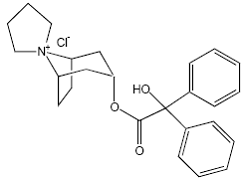
SANCTURA® (trospium chloride) is a quaternary
ammonium compound with the chemical name of Spiro [8azoniabicyclo[3.2.1]octane-8,1'-pyrrolidinium],
3-[(hydroxydiphenylacetyl)oxy]-, chloride, (1α, 3β, 5α).
The empirical formula of trospium chloride is C25H30ClNO3
and its molecular weight is 427.97. The structural formula of trospium chloride
is represented below:
Trospium chloride is a fine,
colorless to slightly yellow, crystalline solid. The compound's solubility in
water is approximately 1 g per 2 mL.
Each SANCTURA® tablet
contains 20 mg of trospium chloride, a muscarinic antagonist, for oral
administration. Each tablet also contains the following inactive ingredients:
sucrose, wheat starch, microcrystalline cellulose, talc, lactose monohydrate,
calcium carbonate, titanium dioxide, stearic acid, croscarmellose sodium,
povidone, polyethylene glycol 8000, colloidal silicon dioxide, ferric oxide,
carboxymethylcellulose sodium, white wax, magnesium stearate, and carnauba wax.
Indications & Dosage
INDICATIONS
SANCTURA® is a
muscarinic antagonist indicated for the treatment of overactive bladder (OAB)
with symptoms of urge urinary incontinence, urgency, and urinary frequency.
DOSAGE AND ADMINISTRATION
The recommended dose is 20 mg twice daily. SANCTURA® should
be dosed at least one hour before meals or given on an empty stomach.
Dosage modification is recommended in the following patient
populations:
For patients with severe renal impairment (creatinine
clearance less than 30 mL/min), the recommended dose is 20 mg once daily at
bedtime [see WARNINGS AND PRECAUTIONS, Use In Specific Populations,
and CLINICAL PHARMACOLOGY].
In geriatric patients greater than or equal to 75 years of
age, dose may be titrated down to 20 mg once daily based upon tolerability [see Use In Specific Populations].
HOW SUPPLIED
Dosage Forms And Strengths
SANCTURA® is supplied as 20 mg tablets (brownish
yellow, biconvex, glossy coated tablets printed with S in black ink).
Storage And Handling
SANCTURA® tablets 20 mg (brownish yellow, biconvex, glossy coated tablets printed with S in black ink)
are supplied as follows: 60 count HDPE bottle -NDC 0023-3513-60
Store at controlled room
temperature 20° -25°C (68° -77°F) (see USP).
Manufactured for: Allergan, Inc.
Irvine, CA 92612, U.S.A. Manufactured by: Madaus GmbH Troisdorf, Germany. Revised: 07/2012
Side Effects
Clinical Trials Experience
Because clinical trials are conducted under widely varying
conditions, the adverse reaction rates observed in the clinical trials of a
drug cannot be directly compared to rates in the clinical trials of another
drug and may not reflect the rates observed in clinical practice.
The safety of SANCTURA® was evaluated in
controlled clinical trials in a total of 2975 patients, who were treated with
SANCTURA® (N=1673), placebo (N=1056) or active control medications
(N=246). Of this total, 1181 patients participated in two, 12-week, U.S.,
efficacy and safety studies and a 9-month open-label extension. Of this total,
591 patients received SANCTURA® 20 mg twice daily. In all controlled
trials combined, 232 and 208 patients received treatment with SANCTURA® for
at least 24 and 52 weeks, respectively.
In all placebo-controlled trials combined, the incidence of
serious adverse events was 2.9% among patients receiving SANCTURA® 20
mg twice daily and 1.5% among patients receiving placebo. Table 1 lists adverse
reactions from the combined 12-week U.S. safety and efficacy trials were
reported by at least 1% of patients, and were reported more frequently in the
SANCTURA® group than in the placebo group.
The two most common adverse reactions reported by patients
receiving SANCTURA® 20 mg twice daily were dry mouth and
constipation. The single most frequently reported adverse reaction for SANCTURA®,
dry mouth, occurred in 20.1% of SANCTURA® treated patients and 5.8%
of patients receiving placebo. In the two U.S. studies, dry mouth led to
discontinuation in 1.9% of patients treated with SANCTURA® 20 mg
twice daily. For the patients who reported dry mouth, most had their first
occurrence of the event within the first month of treatment.
Table 1: Incidence (%) of adverse reactions with SANCTURA®,
reported in greater than or equal to 1% of all patients treated with SANCTURA® and more frequent with SANCTURA® (20 mg twice daily) than
placebo in Studies 1 and 2 combined
Adverse Reaction
Placebo
(N=590)
SANCTURA® 20 mg twice daily
(N=591)
Gastrointestinal Disorders
Dry mouth
34 ( 5.8)
119 (20.1)
Constipation
27 (4.6)
57 (9.6)
Abdominal pain upper
7 (1.2)
9 (1.5)
Constipation aggravated
5 (0.8)
8 (1.4)
Dyspepsia
2 (0.3)
7 (1.2)
Flatulence
5 (0.8)
7 (1.2)
Nervous System Disorders
Headache
12 (2.0)
25 (4.2)
General Disorders
Fatigue
8 (1.4)
11 (1.9)
Renal and Urinary Disorders
Urinary retention
2 (0.3)
7 (1.2)
Eye Disorders
Dry eyes
2 (0.3)
7 (1.2)
Other adverse reactions from the
U.S., placebo-controlled trials , occurring in greater than or equal to 0.5%
and less than 1.0% of SANCTURA® treated patients, and more common
with SANCTURA® than placebo are: tachycardia , vision blurred,
abdominal distension, vomiting, dysgeusia, dry throat, and dry skin.
During controlled clinical
studies, one adverse reaction of angioneurotic edema was reported.
Post-marketing Experience
The following adverse reactions
have been identified during post-approval use of trospium chloride. Because
these reactions are reported voluntarily from a population of uncertain size,
it is not always possible to reliably estimate their frequency or establish a
causal relationship to drug exposure.
Concomitant use of SANCTURA® and digoxin did not
affect the pharmacokinetics of either drug [see CLINICAL PHARMACOLOGY].
Drugs Eliminated by Active Tubular Secretion
Although demonstrated in a drug-drug interaction study not
to affect the pharmacokinetics of digoxin, SANCTURA® has the
potential for pharmacokinetic interactions with other drugs that are eliminated
by active tubular secretion (e.g., procainamide, pancuronium, morphine,
vancomycin, and tenofovir). Coadministration of SANCTURA® with these
drugs may increase the serum concentration of SANCTURA® and/or the coadministered
drug due to competition for this elimination pathway. Careful patient
monitoring is recommended in patients receiving such drugs [see CLINICAL
PHARMACOLOGY].
Antimuscarinic Agents
The concomitant use of SANCTURA® with other
antimuscarinic agents that produce dry mouth, constipation, and other
anticholinergic pharmacological effects may increase the frequency and/or
severity of such effects. SANCTURA® may potentially alter the
absorption of some concomitantly administered drugs due to anticholinergic
effects on gastrointestinal motility.
Metformin
Co-administration of 500 mg metformin immediate release
tablets twice daily with SANCTURA XR® (trospium chloride 60 mg
extended release) reduced the steady-state systemic exposure of trospium by
approximately 29% for mean AUC0-24 and by 34% for mean Cmax [see CLINICAL
PHARMACOLOGY].
Warnings & Precautions
WARNINGS
Included as part of the PRECAUTIONS section.
PRECAUTIONS
Risk of Urinary Retention
SANCTURA® should be administered with caution to
patients with clinically significant bladder outflow obstruction because of the
risk of urinary retention [see CONTRAINDICATIONS].
Angioedema
Angioedema of the face, lips, tongue, and/or larynx has been
reported with trospium chloride, the active ingredient in SANCTURA®.
In one case, angioedema occurred after the first dose of trospium chloride.
Angioedema associated with upper airway swelling may be life threatening. If involvement
of the tongue, hypopharynx, or larynx occurs, SANCTURA® should be
promptly discontinued and appropriate therapy and/or measures necessary to
ensure a patent airway should be promptly provided.
Decreased Gastrointestinal Motility
SANCTURA® should be administered with caution to
patients with gastrointestinal obstructive disorders because of the risk of
gastric retention [see CONTRAINDICATIONS]. SANCTURA®, like
other antimuscarinic agents, may decrease gastrointestinal motility and should
be used with caution in patients with conditions such as ulcerative colitis,
intestinal atony and myasthenia gravis.
Controlled Narrow-angle Glaucoma
In patients being treated for narrow-angle glaucoma,
SANCTURA® should only be used if the potential benefits outweigh the
risks and in that circumstance only with careful monitoring [see CONTRAINDICATIONS].
Central Nervous System Effects
SANCTURA® is associated with anticholinergic
central nervous system (CNS) effects [see ADVERSE REACTIONS]. A variety
of CNS anticholinergic effects have been reported, including dizziness,
confusion, hallucinations and somnolence. Patients should be monitored for
signs of anticholinergic CNS effects, particularly after beginning treatment or
increasing the dose. Advise patients not to drive or operate heavy machinery
until they know how SANCTURA® affects them. If a patient experiences
anticholinergic CNS effects, dose reduction or drug discontinuation should be
considered.
Anticholinergic Adverse Reactions in Patients with Moderate
Renal Impairment
Trospium is substantially excreted by the kidney. The
effects of moderate renal impairment on systemic exposure are not known but
systemic exposure is likely increased. Therefore, anticholinergic adverse
reactions (including dry mouth, constipation, dyspepsia, urinary tract
infection, and urinary retention) are expected to be greater in patients with
moderate renal impairment [see DOSAGE AND ADMINISTRATION, and Use in
Specific Populations].
Patients should be informed that
trospium chloride, the active ingredient in SANCTURA®, may produce
angioedema which could result in life-threatening airway obstruction. Patients
should be advised to promptly discontinue SANCTURA® and seek
immediate medical attention if they experience edema of the tongue, edema of
the laryngopharynx, or difficulty breathing.
When Not to Use
Prior to treatment, patients
should fully understand the risks and benefits of SANCTURA®. In
particular, patients should be informed not to take SANCTURA® tablets
if they:
have urinary retention;
gastric retention;
uncontrolled narrow-angle
glaucoma;
are allergic to any component of SANCTURA®.
Administration
Patients should be instructed
regarding the recommended dosing and administration of SANCTURA®:
Take one SANCTURA® tablet twice daily
with water.
Take SANCTURA® on an empty
stomach or at least 1 hour before a meal.
Adverse Reactions
Patients should be informed that
the most common side effects with SANCTURA® are dry mouth and
constipation and that other less common side effects include trouble emptying
the bladder, blurred vision, and heat prostration. Because anticholinergics,
such as SANCTURA®, may produce dizziness or blurred vision, patients
should be advised to exercise caution in decisions to engage in potentially
dangerous activities until the drug's effects have been determined. Patients
should be informed that alcohol may enhance the drowsiness caused by
anticholinergic agents.
Nonclinical Toxicology
Carcinogenesis, Mutagenesis, Impairment of Fertility
Carcinogenesis
Carcinogenicity studies with trospium chloride were
conducted in mice and rats for 78 weeks and 104 weeks, respectively, at
maximally tolerated doses. No evidence of a carcinogenic effect was found in
either mice or rats administered up to 200 mg/kg/day, approximately 9 times the
expected clinical exposure levels at the maximum recommended human dose (MRHD)
of 40 mg.
Mutagenesis
Trospium chloride was not mutagenic nor genotoxic in tests in
vitro in bacteria (Ames test) and mammalian cells (L5178Y mouse lymphoma and
CHO cells) or in vivo in the rat micronucleus test.
Impairment of Fertility
No evidence of impaired fertility was observed in rats
administered doses up to 200 mg/kg/day (about 16 times the expected clinical
exposure at the MRHD, based on AUC).
Use In Specific Populations
Pregnancy
Teratogenic Effects
Pregnancy Category C: There are no adequate and
well-controlled studies of SANCTURA® in pregnant women. SANCTURA® should be used during pregnancy only if the potential benefit to the
patient outweighs the risk to the patient and fetus. Women who become pregnant
during SANCTURA® treatment are encouraged to contact their
physician.
Risk Summary
Based on animal data, trospium chloride is predicted to have
a low probability of increased risk of adverse developmental outcomes, above
background risk. Adverse developmental findings were not observed to correlate
with dose in rats or in rabbits. No increased risk above background was
observed in rats and rabbits treated at an exposure approximately equivalent to
the maximal recommended human dose (MRHD) of 40 mg.
Animal Data
In a rat embryo/fetal development study, pregnant rats
received doses of trospium chloride up to 200 mg/kg/day, from implantation to
closure of the fetal hard palate, with maternal systemic exposures
corresponding to approximately nine times the exposure of women treated at the
MRHD of 40 mg, based on AUC. No malformations or fetal toxicity were observed.
The offspring of female rats exposed orally, pre-and
post-natally, to trospium chloride up to 200 mg/kg/day showed no increased
developmental toxicity over background in surviving pups. However, maternal
toxicity (death, irregular breathing, increased excitability) was observed at
200 mg/kg/day. A no-effect level for maternal and pup toxicity (survival to Day
4) was 20 mg/kg/day, an exposure approximately equivalent to the maximal
recommended human dose (MRHD) of 40 mg.
In a rabbit embryo/fetal development study, pregnant rabbits
received doses of trospium chloride up to 200 mg/kg/day, from implantation to
closure of the fetal hard palate. At 200 mg/kg/day, maternal systemic exposures
corresponded to approximately 16 times the exposure of women treated at the
MRHD of 40 mg, based on AUC. However, one fetus in each of the three treated
dose groups (0.3 to 16 times exposures at the MRHD) demonstrated multiple
malformations, including umbilical hernia and skeletal malformations. A maternal
no-effect level was set at 20 mg/kg/day, at an exposure approximately
equivalent to the maximal recommended human dose (MRHD) of 40 mg, due to
clinical signs (reduced feces, hunched posture, diarrhea) observed in a
pharmacokinetic study at 200 mg/kg/day.
Labor and Delivery
The effect of SANCTURA® tablets on labor and
delivery is unknown.
Nursing Mothers
Trospium chloride (2 mg/kg orally and 50 mcg/kg
intravenously) was excreted, to a limited extent (less than 1%), into the milk
of lactating rats (primarily as parent compound). It is not known whether this
drug is excreted in human milk. Because many drugs are excreted in human milk,
SANCTURA® should be used during lactation only if the potential
benefit justifies the potential risk to the newborn.
Pediatric Use
The safety and effectiveness of SANCTURA® in
pediatric patients have not been established.
Geriatric Use
Of the 591 patients with overactive bladder who received
treatment with SANCTURA® in the two U.S., placebo-controlled,
efficacy and safety studies, 249 patients (42%) were 65 years of age and older.
Eighty-eight SANCTURA® treated patients (15%) were greater than or
equal to 75 years of age.
In these 2 studies, the incidence of commonly reported
anticholinergic adverse reactions in patients treated with SANCTURA® (including
dry mouth, constipation, dyspepsia, urinary tract infection, and urinary
retention) was higher in patients 75 years of age and older as compared to
younger patients. This effect may be related to an enhanced sensitivity to
anticholinergic agents in this patient population [see CLINICAL PHARMACOLOGY].
Therefore, based upon tolerability, the dose frequency of SANCTURA® may
be reduced to 20 mg once daily in patients 75 years of age and older.
Renal Impairment
Severe renal impairment (creatinine clearance less than 30
mL/minute) significantly altered the disposition of SANCTURA®. A
4.2-fold and 1.8-fold increase in mean AUC(0-∞) and Cmax, respectively,
and the appearance of an additional elimination phase with a long half-life
(~33 hr) were detected in patients with severe renal impairment compared with
nearly age-matched subjects with creatinine clearance equal to or higher than
80 mL/min. The different pharmacokinetic behavior of SANCTURA® in
patients with severe renal impairment necessitates adjustment of dosage
frequency [see DOSAGE AND ADMINISTRATION]. The pharmacokinetics of
trospium have not been studied in patients with creatinine clearance ranging
from 30-80 mL/min.
Trospium is known to be substantially excreted by the
kidney, and the risk of adverse reactions may be greater in patients with
impaired renal function.
Hepatic Impairment
There is no information regarding the effect of severe
hepatic impairment on exposure to SANCTURA®. In a study of patients
with mild and with moderate hepatic impairment, given 40 mg of
immediate-release trospium chloride, mean Cmax increased 12% and 63%,
respectively, and mean AUC(0-∞) decreased 5% and 15%, respectively,
compared to healthy subjects. The clinical significance of these findings is
unknown. Caution should be used when administering SANCTURA® to
patients with moderate and severe hepatic impairment.
Overdosage & Contraindications
OVERDOSE
Overdosage with antimuscarinic agents, including SANCTURA®,
can result in severe antimuscarinic effects. Supportive treatment should be
provided according to symptoms. In the event of overdosage,
electrocardiographic monitoring is recommended.
A 7-month-old baby experienced tachycardia and mydriasis
after administration of a single dose of trospium 10 mg given by a sibling. The
baby's weight was reported as 5 kg. Following admission into the hospital and
about 1 hour after ingestion of the trospium, medicinal charcoal was
administered for detoxification. While hospitalized, the baby experienced
mydriasis and tachycardia up to 230 beats per minute. Therapeutic intervention
was not deemed necessary. The baby was discharged as completely recovered the
following day.
CONTRAINDICATIONS
SANCTURA® is contraindicated in patients with:
urinary retention
gastric retention
uncontrolled narrow-angle glaucoma.
known hypersensitivity to the drug or its ingredients.
Angioedema, rash and anaphylactic reaction have been reported.
Trospium chloride antagonizes the
effect of acetylcholine on muscarinic receptors in cholinergically innervated
organs including the bladder. Its parasympatholytic action reduces the tonus of
smooth muscle in the bladder.
Receptor assays showed that
trospium chloride has negligible affinity for nicotinic receptors as compared
to muscarinic receptors at concentrations obtained from therapeutic doses.
Pharmacodynamics
Placebo-controlled studies employing urodynamic variables
were conducted in patients with conditions characterized by involuntary
detrusor contractions. The results demonstrate that SANCTURA® increases
maximum cystometric bladder capacity and volume at first detrusor contraction.
Electrophysiology
The effect of 20 mg twice daily and up to 100 mg twice daily
SANCTURA® on QT interval was evaluated in a single-blind,
randomized, placebo and active (moxifloxacin 400 mg once daily) controlled 5
day parallel trial in 170 male and female healthy volunteer subjects aged 18 to
45 years. The QT interval was measured over a 24-hour period at steady state.
The 100 mg twice daily dose of SANCTURA® was chosen because this
achieves the Cmax expected in severe renal impairment. SANCTURA® was
not associated with an increase in individual corrected (QTcI) or Fridericia
corrected (QTcF) QT interval at any time during steady state measurement, while
moxifloxacin was associated with a 6.4 msec increase in QTcF.
In this study, asymptomatic, non-specific T wave inversions
were observed more often in subjects receiving SANCTURA® than in
subjects receiving moxifloxacin or placebo following five days of treatment.
This finding was not observed during routine safety monitoring in 2 other
placebo-controlled clinical trials in 591 SANCTURA® treated
overactive bladder patients [see Clinical Studies]. The clinical
significance of T wave inversion in this study is unknown. SANCTURA® is
associated with an increase in heart rate that correlates with increasing
plasma concentrations. In the study described above, SANCTURA® demonstrated
a mean increase in heart rate compared to placebo of 9.1 bpm for the 20 mg dose
and of 18 bpm for the 100 mg dose. In the two U.S. placebo-controlled trials in
patients with overactive bladder, the mean increase in heart rate compared to
placebo in Study 1 was observed to be 3 bpm and in Study 2 was 4 bpm.
Pharmacokinetics
Absorption
After oral administration, less than 10% of the dose is
absorbed. Mean absolute bioavailability of a 20 mg dose is 9.6% (range:
4-16.1%). Peak plasma concentrations (Cmax) occur between 5 to 6 hours
post-dose. Mean Cmax increases greater than dose-proportionally; a 3-fold and
4-fold increase in Cmax was observed for dose increases from 20 mg to 40 mg and
from 20 mg to 60 mg, respectively. AUC exhibits dose linearity for single doses
up to 60 mg. SANCTURA® exhibits diurnal variability in exposure with
a decrease in Cmax and AUC of up to 59% and 33%, respectively, for evening
relative to morning doses.
Effect of Food
Administration with a high (50%) fat-content meal resulted
in reduced absorption, with AUC and Cmax values 70-80% lower than those
obtained when SANCTURA® was administered while fasting. Therefore,
it is recommended that SANCTURA® should be taken at least one hour
prior to meals or on an empty stomach [see DOSAGE AND ADMINISTRATION].
A summary of mean (± standard deviation) pharmacokinetic
parameters for a single 20 mg dose of SANCTURA® is provided in Table
2.
Table 2: Mean (± SD) Pharmacokinetic Parameter Estimates
for a Single 20 mg SANCTURA® Dose in Healthy Volunteers
Cmax (ng/mL)
AUC0-∞ (ng/mL•hr)
Tmax (hr)
t½ (hr)
3.5 ± 4.0
36.4 ± 21.8
5.3 ± 1.2
18.3 ± 3.2
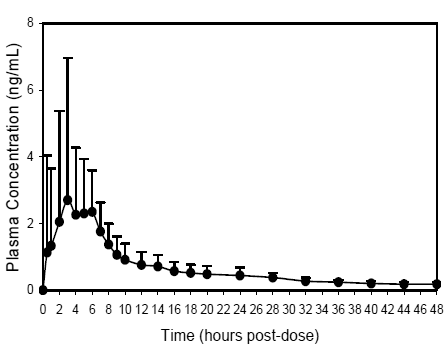
The mean plasma concentration-time
(+ SD) profile for SANCTURA® is shown in Figure 1.
Figure 1 : Mean (+ SD) Concentration-Time Profile for a
Single 20 mg Oral Dose of SANCTURA® in Healthy Volunteers
Distribution
Protein binding ranged from 50 to
85% when concentration levels of trospium chloride (0.5-50 ng/mL) were
incubated with human serum in vitro.
The 3H-trospium
chloride ratio of plasma to whole blood was 1.6:1. This ratio indicates that
the majority of 3H-trospium chloride is distributed in plasma.
The apparent volume of
distribution for a 20 mg oral dose is 395 (± 140) liters.
Metabolism
The metabolic pathway of trospium
in humans has not been fully defined. Of the 10% of the dose absorbed,
metabolites account for approximately 40% of the excreted dose following oral
administration. The major metabolic pathway is hypothesized as ester hydrolysis
with subsequent conjugation of benzylic acid to form azoniaspironortropanol
with glucuronic acid. Cytochrome P450 (CYP) is not expected to contribute
significantly to the elimination of trospium. Data taken from in vitro human
liver microsomes investigating the inhibitory effect of trospium on seven CYP
isoenzyme substrates (CYP1A2, 2A6, 2C9, 2C19, 2D6, 2E1, and 3A4) suggest a lack
of inhibition at clinically relevant concentrations.
Excretion
The plasma half-life for SANCTURA® following oral administration is approximately 20 hours. After oral
administration of an immediate-release formulation of 14C-trospium
chloride, the majority of the dose (85.2%) was recovered in feces and a smaller
amount (5.8% of the dose) was recovered in urine; 60% of the radioactivity
excreted in urine was unchanged trospium.
The mean renal clearance for
trospium (29.07 L/hour) is 4-fold higher than average glomerular filtration
rate, indicating that active tubular secretion is a major route of elimination
for trospium. There may be competition for elimination with other compounds
that are also renally eliminated [see DRUG INTERACTIONS].
Drug Interactions
Digoxin: Concomitant use of 20 mg SANCTURA® (trospium
chloride immediate release) twice daily at steady state and a single dose of
0.5 mg digoxin in a with 40 male and female subjects did not
affect the pharmacokinetics of either drug.
Metformin: A drug interaction study was conducted in
which SANCTURA XR® 60 mg once daily was coadministered with
Glucophage® (metformin hydrochloride) 500 mg twice daily under
steady-state conditions in 44 healthy subjects. Co-administration of 500 mg
metformin immediate release tablets twice daily reduced the steady-state
systemic exposure of trospium by approximately 29% for mean AUC0-24 and by 34%
for mean Cmax. The effect of decrease in trospium exposure on the efficacy of
SANCTURA XR® is unknown. The steady-state pharmacokinetics of
metformin were comparable when administered with or without 60 mg SANCTURA XR® once daily under fasted condition. The effect of metformin at higher
doses on trospium PK is unknown.
Specific Populations
Age: Age did not appear to significantly affect the
pharmacokinetics of SANCTURA®, however, increased anticholinergic
side effects unrelated to drug exposure were observed in patients greater than
or equal to 75 years of age [see Use In Specific Populations].
Pediatric: The pharmacokinetics of SANCTURA® were
not evaluated in pediatric patients.
Race: Pharmacokinetic differences due to race have
not been studied.
Gender: Studies comparing the pharmacokinetics in
different genders had conflicting results. When a single 40 mg SANCTURA® dose
was administered to 16 elderly subjects, exposure was 45% lower in elderly
females compared to elderly males. When 20 mg SANCTURA® was dosed
twice daily for 4 days to 6 elderly males and 6 elderly females (60 to 75
years), AUC and Cmax were 26% and 68% higher, respectively, in females without
hormone replacement therapy than in males.
Renal Impairment: In a clinical pharmacokinetic study
where a single dose of 40 mg immediate release trospium chloride was
administered to 12 healthy males and 12 males with severe renal impairment,
severe renal impairment (creatinine clearance less than 30 mL/minute)
significantly altered the disposition of SANCTURA®. A 4.2-fold and
1.8-fold increase in mean AUC(0-∞) and Cmax, respectively, and the
appearance of an additional elimination phase with a long half-life (~33 hours
vs. 18 hours) were detected in patients with severe renal impairment compared
with nearly age-matched subjects with creatinine clearance equal to or higher
than 80 mL/min. The different pharmacokinetic behavior of SANCTURA® in
patients with severe renal impairment necessitates adjustment of dosage
frequency [see DOSAGE AND ADMINISTRATION]. The pharmacokinetics of
trospium have not been studied in patients with creatinine clearance ranging
from 30-80 mL/min.
Hepatic Impairment: In a clinical pharmacokinetic
study in patients with mild (Child-Pugh score 5-6) and with moderate
(Child-Pugh score 7-8) hepatic impairment, given a single dose of 40 mg
immediate-release trospium chloride, mean Cmax increased 12% and 63%,
respectively, and mean AUC(0-∞) decreased 5% and 15%, respectively,
compared to healthy subjects. There is no information regarding the effect of
severe hepatic impairment on exposure to SANCTURA®.
Clinical Studies
SANCTURA® was evaluated for the treatment of
patients with overactive bladder who had symptoms of urinary frequency,
urgency, and urge incontinence in two U.S. 12-week, placebo-controlled studies
and one 9-month open label extension.
Study 1 was a randomized, double-blind,
placebo-controlled, parallel-group study in 523 patients. A total of 262
patients received SANCTURA® 20 mg twice daily and 261 patients
received placebo. The majority of patients were Caucasian (85%) and female
(74%) with a mean age of 61 years (range: 21 to 90 years). Entry criteria
required that patients have urge or mixed incontinence (with a predominance of
urge), urge incontinence episodes of at least 7 per week, and greater than 70
micturitions per week. The patient's medical history and urinary diary during
the treatment-free baseline confirmed the diagnosis. Reductions in urinary
frequency, urge incontinence episodes and urinary void volume for placebo and
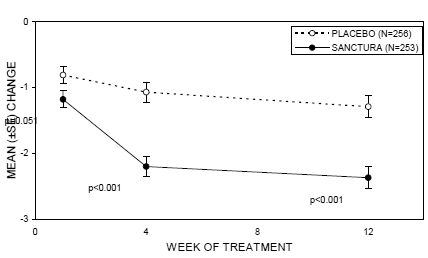
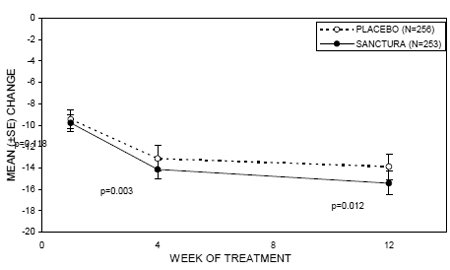
SANCTURA® treatment groups are summarized in Table 3 and Figures 2
and 3.
Table 3: Mean (SE) change from baseline to end of
treatment (Week 12 or last observation carried forward) for urinary frequency,
urge incontinence episodes, and void volume in Study 1
Efficacy endpoint
Placebo N=256
SANCTUR A® N=253
P-value
Urinary frequency/24 hours a,*
Mean baseline
12.9
12.7
Mean change from baseline
-1.3 (0.2)
-2.4 (0.2)
< 0.001
Urge incontinence episodes/week b,*
Mean baseline
30.1
27.3
Mean change from baseline
-13.9 (1.2)
-15.4 (1.1)
0.012
Urinary void volume/toilet void (mL)a,c
Mean baseline
156.6
155.1
Mean change from baseline
7.7 (3.1)
32.1 (3.1)
< 0.001
a Treatment differences assessed by analysis of
variance for ITT:LOCF data set. b Treatment differences assessed by ranked analysis of variance for
ITT:LOCF data set. c Placebo N=253, SANCTURA® N=248.
* Denotes co-primary endpoint
ITT=intent-to-treat, LOCF=last observation carried forward.
Figure 2 : Mean Change from Baseline in Urinary Frequency/24 Hours, by Visit: Study 1
Figure 3 : Mean Change from
Baseline in Urge Incontinence/Week, by Visit: Study 1
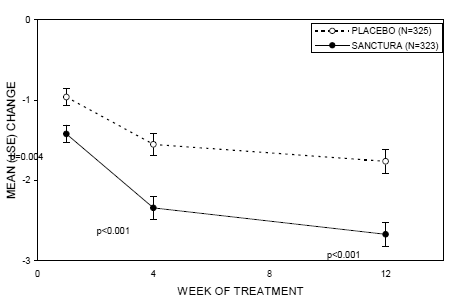
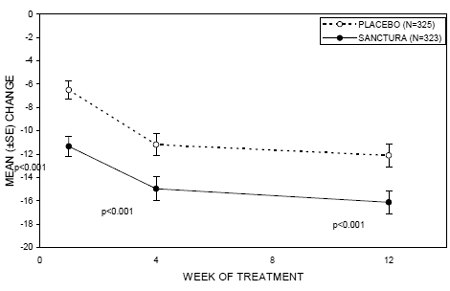
Study 2 was nearly identical in
design to Study 1. A total of 329 patients received SANCTURA® 20 mg
twice daily and 329 patients received placebo. The majority of patients were
Caucasian (88%) and female (82%) with a mean age of 61 years (range: 19 to 94
years). Entry criteria were identical to Study 1. Reductions in urinary
frequency, urge incontinence episodes, and urinary void volume for placebo and
SANCTURA® treatment groups are summarized in Table 4 and Figures 4
and 5.
Table 4: Mean (SE) change from baseline to end of
treatment (Week 12 or last observation carried forward) for urinary frequency,
urge incontinence episodes, and void volume in Study 2
Efficacy endpoint
Placebo N=325
SANCTUR A® N=323
P-value
Urinary frequency/24 hoursa,*
Mean baseline
13.2
12.9
Mean change from baseline
-1.8 (0.2)
-2.7 (0.2)
< 0.001
Urge incontinence episodes/weekb
Mean baseline
27.3
26.9
Mean change from baseline
-12.1 (1.0)
-16.1 (1.0)
< 0.001
Urinary void volume/toilet void (mL)a,c
Mean baseline
154.6
154.8
Mean change from baseline
9.4 (2.8)
35.6 (2.8)
< 0.001
a Treatment differences assessed by analysis of
variance for ITT:LOCF data set. b Treatment differences assessed by ranked analysis of variance for
ITT:LOCF data set. c Placebo N=320, SANCTURA® N=319.
* Denotes primary endpoint
ITT=intent-to-treat, LOCF=last observation carried forward.
Figure 4 : Mean Change from Baseline in Urinary Frequency/24 Hours, by Visit: Study 2
Figure 5 : Mean Change from
Baseline in Urge Incontinence/Week, by Visit: Study 2
Read the Patient Information that
comes with SANCTURA® before you start taking it and each time you
get a refill. There may be new information. This leaflet does not take the
place of talking with your doctor about your medical condition or your
treatment.
What is SANCTURA®?
SANCTURA® is a
prescription medicine used to treat adults with overactive bladder who have the
following symptoms:
a strong need to urinate right away;
leaking or wetting accidents due to a strong need to urinate
right away;
a need to urinate often.
Who should not take SANCTURA®?
Do not take SANCTURA® if you:
have trouble emptying your bladder;
have delayed or slow emptying of your stomach;
have an eye problem called “uncontrolled narrow-angle
glaucoma”;
are allergic to SANCTURA® or any of its
ingredients. See the end of this leaflet for a complete list of ingredients.
SANCTURA® has not been
studied in children under the age of 18 years.
What should I tell my doctor
before starting SANCTURA®?
Tell your doctor about all of your
medical conditions including if you:
have any stomach or intestinal problems or problems with
constipation;
have trouble emptying your bladder or have a weak urine
stream;
have an eye problem called narrow-angle glaucoma;
have kidney problems;
have liver problems;
are pregnant or planning to become pregnant. It is not known
if SANCTURA® can harm your unborn baby.
are breastfeeding. It is not known if SANCTURA® passes
into breast milk and if it can harm your baby. You should talk to your doctor
about the best way to feed your baby if you are taking SANCTURA®.
Tell your doctor about all the
medicines you take including prescription and nonprescription medicines,
vitamins and herbal supplements. SANCTURA® and certain other
medicines can interact and make some side effects worse. SANCTURA® can
affect how other medicines are handled by the body.
Know all the medicines you take.
Keep a list of them with you to show your doctor and pharmacist each time you
get a new medicine.
How should I take SANCTURA®?
Take SANCTURA® exactly
as prescribed.
Take one SANCTURA® tablet twice daily with water.
Take SANCTURA® on an empty stomach or at least 1
hour before a meal.
If you take too much SANCTURA®, call your local
Poison Control Center or go to an emergency room right away.
What are the possible side
effects of SANCTURA®?
SANCTURA® may cause
allergic reactions that may be serious. Symptoms of a serious allergic reaction
may include swelling of the face, lips, throat or tongue. If you experience
these symptoms, you should stop taking SANCTURA® and get emergency
medical help right away.
SANCTURA® may cause
other less common side effects, including:
trouble emptying the bladder;
blurred vision; and drowsiness. Do not drive or operate
heavy machinery until you know how SANCTURA® affects you. Alcohol
can worsen the drowsiness caused by drugs such as SANCTURA®.
heat prostration. Due to decreased sweating, heat
prostration can occur when drugs such as SANCTURA® are used in a hot
environment.
Tell your doctor if you have any
side effects that bother you or that do not go away.
These are not all possible side
effects of SANCTURA®. For more information, ask your doctor,
healthcare professional or pharmacist.
How should I store SANCTURA®?
Keep SANCTURA® and all other medicines out of the
reach of children.
Store SANCTURA® at room temperature, 68° to 77°F
(20° to 25°C).
Safely dispose of SANCTURA® tablets that are out
of date or that you no longer need.
General information about
SANCTURA®
Medicines are sometimes prescribed
for conditions that are not mentioned in patient information leaflets. Do not
use SANCTURA® for a condition for which it was not prescribed. Do
not give SANCTURA® to other people, even if they have the same
symptoms you have. It may harm them.
This leaflet summarizes the most
important information about SANCTURA®. If you would like more
information, talk with your doctor. You can ask your doctor or pharmacist for
information about SANCTURA® that is written for health
professionals. You can also call Allergan's product information department at
1-800433-8871.