
How Do You Get Rid of a Corn On Your Foot?
- Definition
- Symptoms
- Causes
- Who Can Get Corns?
- Diagnosis
- Treatment
-
Complications
- Complications of corns
What is a corn on the foot?
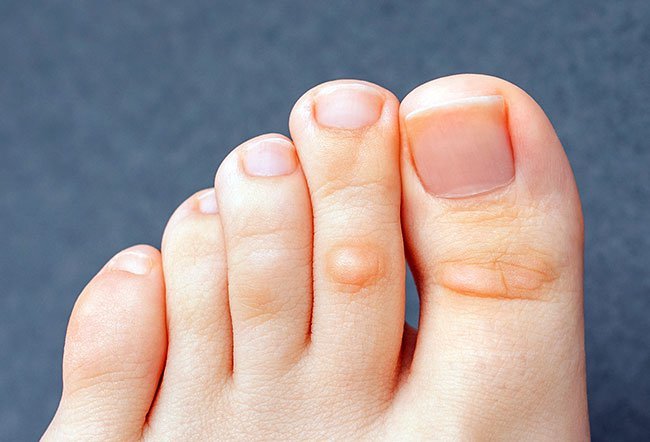
Corns may be uncomfortable, but they grow to protect your foot from damage and can be easily treated. These are also called hyperkeratosis and are often caused by friction or pressure on the skin.
A corn is a hard, yellow lump of skin that usually grows on the feet. They grow because of stress and pressure on the skin, but are not considered a skin disease. However, sometimes they can develop infections and affect your daily activities.
Symptoms of corns
There are two types of corns: hard corns and soft corns. Hard corns have a cone-shaped root made of keratin, the protein found in hair, skin, and nails.
Symptoms of a hard corn on your feet may include:
They grow on the baby toe, on tops of the toes, on bony lumps, or on toe joints.
Soft corns are softer lumps in the skin, usually between the toes. Symptoms of soft corns may include:
- Soggy, soft skin between the toes
- Pain while walking
- Development between fourth and fifth toes
Soft corns are more prone to fungal or bacterial infections as the skin becomes soft and may open.
Causes of corns
Corns are caused by pressure or rubbing on the skin. Extra skin and keratin grows to protect against sores. As the skin and keratin build up, corns grow and can cause pain and difficulty walking.
A number of factors can cause corns on the foot, including:
- Bony lumps on your toes
- How you walk
- Poorly-fitting shoes
- High-heeled shoes
- Bone structure of your foot
Who can get corns
Poorly-fitting shoes are the most common cause of corns. People who wear shoes that are too tight or too small may develop corns. Corns also commonly develop on toes that have bony lumps, that curl under, or have a hammertoe deformity.
People with darker skin and older people could be more likely to develop corns. People who wear high heels or narrower shoes may also be more likely to develop corns.
People with diabetes, heart disease, or other circulation problems are more likely to have problems with their feet.
Diagnosis for corns
To diagnose a corn, your doctor will examine your feet. They may also ask you questions about your shoes, your physical activity, and your medical history.
Your doctor may perform other tests to check for bone problems or other underlying factors. These may include:
- Dermoscopy, to examine the skin under a dermatoscope
- X-Rays to examine bone structure
- Pressure test of the feet
Treatment for a corn on your foot
Your doctor may suggest you manage the corn on your foot with treatment at home.
Medications
You may be able to find over-the-counter corn foot treatments at your pharmacy, including :
- Salicylic acid pad or solution
- Urea 40% cream
Need Expert Advice on Your Condition?
Get a personalized video breakdown and treatment plan from our senior neurosurgeons using your MRI/CT scans.
👉 Request MRI Review