
Cold Sores (Oral Herpes, Herpes Labialis)
- What Are They?
- Primary Oral Herpes
- Causes and Recurrent
-
Risks and Complications
- What are the risk factors for herpes simplex infections?
- What are the possible complications of oral herpes (cold sores)?
- Contagious
- Symptoms & Signs
- Similar Conditions
-
Angular Stomatitis
- What is angular stomatitis?
-
Canker Sores
- What are canker sores?
-
Specialists
- What types of doctors treat cold sores?
-
Tests
- What tests do health care professionals use to diagnose oral herpes?
-
How Long They Last
- How long do cold sores last?
-
Treatment
- What is the treatment for cold sores in children?
- What home remedies and over-the-counter drugs are used for the treatment of cold sores?
- What prescription drugs treat cold sores?
-
Prognosis
- What is the prognosis for oral herpes (cold sores)? Can they be cured?
-
Prevention
- Is it possible to prevent cold sores?
Herpes simplex infections (nongenital cold sores) facts
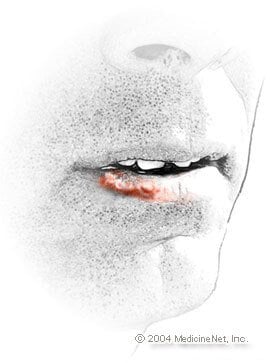
- Herpes simplex virus (HSV) can cause infections that affect the mouth, face, genitals, skin, buttocks, and anal area. It is one of the most common chronic viral infections in humans. The prevalence of HSV-1 (oral herpes) infection is 67% of adults worldwide and is higher than the prevalence of HSV-2 (genital herpes).
- Of the two herpes simplex viruses (HSV-1 and HSV-2), cold sores are most commonly caused by HSV-1.
- The virus resides deep in the nerve roots and may reactivate at a later time, causing the same symptoms and signs in the same location.
- Cold sores (herpes labialis) usually go away within 1-2 weeks, but they can be treated with antiviral medications, like acyclovir or topical antiviral creams such as docosanol (Abreva), to reduce pain and shorten healing time.
What are herpes simplex infections?
Herpes simplex virus (HSV) can cause infections that affect the mouth, face, genitals, skin, buttocks, and anal area. This article will concentrate on nongenital herpes.
- Many people acquire the virus and have no symptoms or signs.
- For others, painful fluid-filled small blisters appear near the area where the virus entered the body.
- Typically, the blisters heal completely but may reappear at some point in the future.
- In between attacks, the virus resides deep in the roots of the nerves of the involved area.
- When herpes simplex flare-ups appear in their most common location, around the mouth, chin, and upper lip, people often refer to them as "cold sores" or "fever blisters."
- Oral herpes may cause ulcers, fluid-filled blisters, or sores anywhere inside the mouth, including the gums and the tongue.
- It may also cause sores inside the nose and around the nostrils. Herpes may also affect the eye.
What is primary oral herpes?
Primary herpes refers to the initial outbreak of symptoms after infection, often presenting with painful sores on the lips, gums, and mouth.
In some people, primary herpes is associated with fever, swollen lymph nodes, and bleeding gums, together with painful ulcers around the mouth (gingivostomatitis) and sore throat. These signs and symptoms may last several days. Difficulty in eating and drinking may lead to dehydration. The sores heal completely in 2-6 weeks, usually without scarring. Virus can be recovered from the saliva for days after the lesions heal. Primary herpes usually occurs during childhood.
Not everyone has a severe primary attack when they are first infected with herpes. In most people, the virus infects the body without causing any symptoms. The process generates an antibody response, causing the immune system to produce antibodies against the herpes virus. This antibody response helps reduce recurrences and keep them mild. Antibodies also make it harder for the virus to get a foothold somewhere else in the body. However, it is possible to transfer the herpes virus to other parts of the body (autoinoculation).
What causes cold sores?
There are two types of HSV, herpes simplex virus type 1 and type 2.
- In general, HSV-1, also known as herpes labialis or oral herpes, causes infections above the waist, most commonly as "cold sores."
- HSV-2 infections occur mainly below the waist, leading to genital herpes.
However, both types of HSV are capable of infecting the skin at any location on the body. Thus, the virus that usually causes oral herpes (HSV-1) can cause genital herpes as well as herpes on the hands and eye. The virus that causes genital herpes (HSV-2) can also cause oral herpes, although it almost exclusively infects the genital area. HSV-1 may cause genital herpes via self-inoculation from oral lesions, or via oral sex.
Herpes infections, no matter where they occur first, have a tendency to recur in more or less the same place. Such recurrences may happen often (for example, several times per year) or only occasionally. You would know that you have herpes if you have an outbreak or if a doctor performs a blood test to tell if you have been infected with it. Most adults have been infected with oral or genital herpes and never know it.
What makes herpes (cold sores) recur?
After infection, the virus enters the nerve cells and travels up the nerve until it comes to a place called a ganglion. There, it resides quietly in a stage that is referred to as "dormant" or "latent." At times, the virus can become active and start replicating again and travel down the nerve to the skin, causing a cold sore outbreak. The exact mechanism behind this is not clear, but it is known that some conditions seem to trigger recurrences, including
- a fever, a cold, or the flu;
- UV rays (sun exposure or a sunburn);
- emotional or physical stress (such as an illness or surgery);
- weakening of the immune system;
- trauma to the involved area such as dental work; and
- sometimes there is no apparent cause of the recurrence.
What are the risk factors for herpes simplex infections?
Exposure to someone with cold sores increases the risk of getting oral herpes. HSV is most contagious when the person has mouth sores or blisters on the lips.
- The virus can also be shed from saliva when there are no visible lesions. This is called "asymptomatic shedding."
- Therefore, a person can be contagious without having a cold sore outbreak.
- Direct contact with the virus, from kissing or sharing personal items, or skin-to-skin contact, will increase the chance of getting infected with HSV.
- Abnormal areas of skin such as eczema may be especially prone to herpes infection.
- Health care workers, such as dentists, dental hygienists, and respiratory therapists, are at risk of developing herpetic whitlow because of contact with people's mouths.
- Medical conditions or treatments that weaken a person's immune system can increase the risk of severe complications from the virus. These include
- HIV,
- cancer,
- chemotherapy, and
- steroids.
Are cold sores contagious?
Oral herpes is contagious to others who do not have it.
How do cold sores spread?
The virus is spread from person to person by kissing, by close contact with herpes lesions, or from saliva even when sores are not present. Infected saliva is a common means of virus transmission. The contagious period is highest when people have active blisters or moist sores. Once the blisters have dried and crusted over (within a few days), the risk of contagion is significantly lessened. HSV can also be spread through personal items that are contaminated with the virus, such as lipstick, utensils, and razors. Despite popular myth, catching herpes (cold sores) from surfaces, towels, or washcloths is a very low risk, since the virus does not usually survive long on dry surfaces.
What is the incubation period for cold sores?
The time between infection and symptoms of primary oral herpes is anywhere from 2 days to 2 weeks.
What are the signs and symptoms of cold sores?
The hallmark symptom of herpes is tingling or a burning sensation before the appearance of the outbreak.
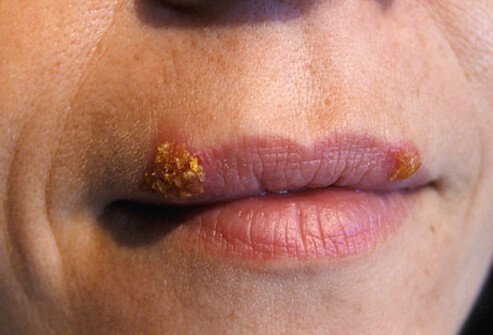
- The classic sign of herpes is a cluster of blisters on a base of red skin.
- The blisters look like a drop of water filled with clear liquid.
- These blisters dry up rapidly and leave a crust or scab that lasts anywhere from a few days to a few weeks, depending on the severity of the infection.
- This pattern has important implications for the many people who fear they have herpes but don't, If you are healthy and the rash lasts for weeks, it is unlikely to be herpes.
Herpes infections feel dry and crusty, and they may cause pain or itch. Some patients have a "prodrome," which is the occurrence of certain symptoms before the actual sores become fully evident. The prodrome to herpes infections typically involves flu-like symptoms and a burning or tingling sensation that precedes the appearance of blisters by a few hours or a day or two.
What does recurrent herpes look like?
Recurrent herpes occurs in the area where it first appeared, though most of the time, there are fewer blisters or a milder outbreak than the first time. Although the face is the most common site of infection, other areas of the body may be involved:
- Labial herpes: This is the familiar cold sore that appears on the lip margins (labial refers to the lip). When labial herpes reappears, it usually occurs at the same location each time or a few millimeters away. L-lysine and other vitamin supplements have not been shown to speed healing or reduce outbreaks.
- Herpetic whitlow: Sometimes, the herpes virus shows up on the fingers. This is especially common in dental and medical workers who have to put their fingers inside people's mouths, despite the use of gloves. In herpetic whitlow, the virus has entered the finger. Occasionally, the virus re-emerges and causes blister-like sores on the fingertip.
- Wrestlers' herpes or herpes gladiatorum: Wrestlers or any athlete engaged in direct contact sports can contract herpes from an opponent who is shedding the virus. This form of herpes can appear anywhere over the body, but the face, neck, and arms are common locations. Unlike most other types of infection, lesions may occur at multiple sites.
- Eczema herpeticum: This may occur in people (especially children) who have areas of eczema or atopic (allergic) dermatitis, which is very itchy. They may scratch and spread herpes to these areas if they have cold sores or other sources of active herpes infection (autoinoculation). The skin involved with eczema or allergic dermatitis is less able to fight viral infections, and herpes spread to this area may result in widespread sores.
In recurrent herpes, it often takes 7-10 days before the ulcers completely disappear and the skin returns to normal.
What other conditions can look like oral herpes (cold sores)?
There are many conditions that can be confused with herpes, including
Need Expert Advice on Your Condition?
Get a personalized video breakdown and treatment plan from our senior neurosurgeons using your MRI/CT scans.
👉 Request MRI Review