
Which Seafood Is Highest in Cholesterol?
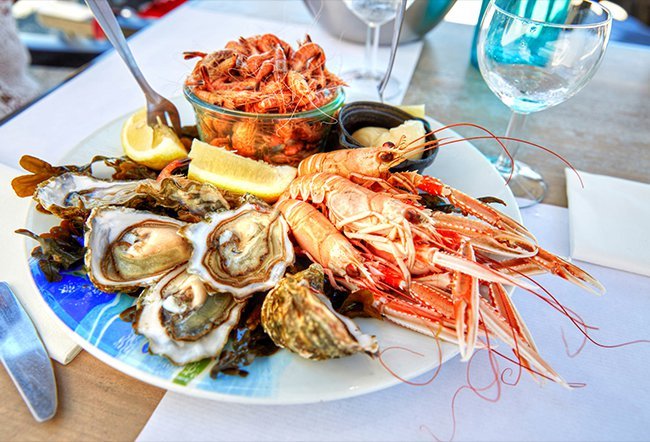
Squid contains the highest amount of cholesterol per unit weight among various seafood.
- A 3.5 oz serving (about 99 grams) of raw squid provides about 231 mg of cholesterol.
- This may exceed your daily dietary cholesterol limits if your doctor has advised you on a low cholesterol diet (containing less than 200 mg of cholesterol per day).
- Moreover, the preparation style (frying, sauteing, or grilling) may further determine the total cholesterol levels per portion.
Besides squid, shrimp is quite high in cholesterol. A 3.5 oz portion of raw shrimp provides 194 mg of cholesterol. This may further increase depending on the method of cooking.
| Seafood (raw, 3.5 oz portions) | Total cholesterol (mg) | Total fat (grams) |
|---|---|---|
| Squid | 231 | 1 |
| Shrimp | 194 | 1 |
| Lobster | 71 | 1 |
| Salmon | 63 | 12 |
| Oysters | 55 | 2 |
| Crab | 52 | 1 |
| Halibut | 41 | 3 |
| Tuna | 30 | 1 |
Interestingly, seafood when consumed in moderation is good for your heart, nerves, brain, and blood cholesterol levels.
- Seafood contains various antioxidants and omega-3 fats that help reduce blood cholesterol levels and improve cardiovascular health.
- To gain maximum benefit, seafood must be cooked with minimal salt and oils or other fats.
Deep frying can add unhealthy calories to your food, thereby increasing the risk of diseases, such as obesity, diabetes, heart disease, and high blood pressure. Prefer sauteing, roasting, steaming, and grilling over deep frying.
How many servings of seafood can you have in a day?
The American Heart Association (AHA) recommends having two servings of fish per week. One serving is three ounces of cooked fish or about three-fourth cup of flaked fish.
The AHA recommends preferring fatty fish, such as salmon, anchovies, herring, sardines, black cod, mackerel, whitefish, bluefin tuna, and striped bass because they are high in omega-3 fatty acids. These fatty acids are good for your heart, brain, and overall health.
According to the dietary guidelines for Americans, adults consuming about 2000 calories a day should have at least eight ounces of fish per week. Pregnant and breastfeeding women can consume two to three servings (four-ounce each) of low-mercury seafood per week.
Children must particularly be given fish that have lower amounts of mercury.
| Child’s age | Quantity of seafood to be consumed per week (ounce) |
|---|---|
| 2 to 3 years | 1 |
| 4 to 7 years | 2 |
| 8 to 10 years | 3 |
| 11 years and older | 4 |
19 seafood that are low in mercury
The amounts of mercury present in fish largely depend on the mercury levels in the water bodies they are present in. Thus, fish procured from water bodies whose mercury levels are kept under check are safer to eat.
Some of the seafood that generally contains lower mercury levels include:
- Tuna
- Salmon
- Trout
- Herring
- Anchovies
- Atlantic mackerel
- Clams
- Crab
- Oysters
- Catfish
- Crawfish
- Flounder
- Scallops
- Haddock
- Mullet
- Squid
- Shrimp
- Shad
- Tilapia
7 seafood that are high in mercury
Fish tend to accumulate mercury when grown in water bodies with high mercury levels.
- The mercury in the water bodies is further changed to an even more harmful compound called methylmercury due to bacterial action.
- Fish that survive longer or consume other fish tend to accumulate higher levels of methylmercury. Hence, such fish must be avoided, particularly for children and pregnant women.
Some of the seafood that may have high mercury levels include:
- Shark
- Swordfish
- Marlin
- Tilefish
- King mackerel
- Orange roughy
- Bigeye and bluefin tuna
Need Expert Advice on Your Condition?
Get a personalized video breakdown and treatment plan from our senior neurosurgeons using your MRI/CT scans.
👉 Request MRI Review