
Arcuate Scotoma
Definition and Clinical Features
An arcuate scotoma (also known as a Bjerrum scotoma) is a specific type of visual field defect characterized by an arc-shaped or bow-shaped area of visual loss. This "blind spot" arches over or under the central point of fixation (the macula) and typically extends from the physiological blind spot (the optic nerve head) toward the nasal visual field.
A defining clinical characteristic of an arcuate scotoma is that it strictly respects the horizontal meridian in the nasal visual field, often ending abruptly to create a "nasal step" defect. In early stages, it may present as a smaller, isolated defect (a Seidel scotoma) before elongating into a full arch.
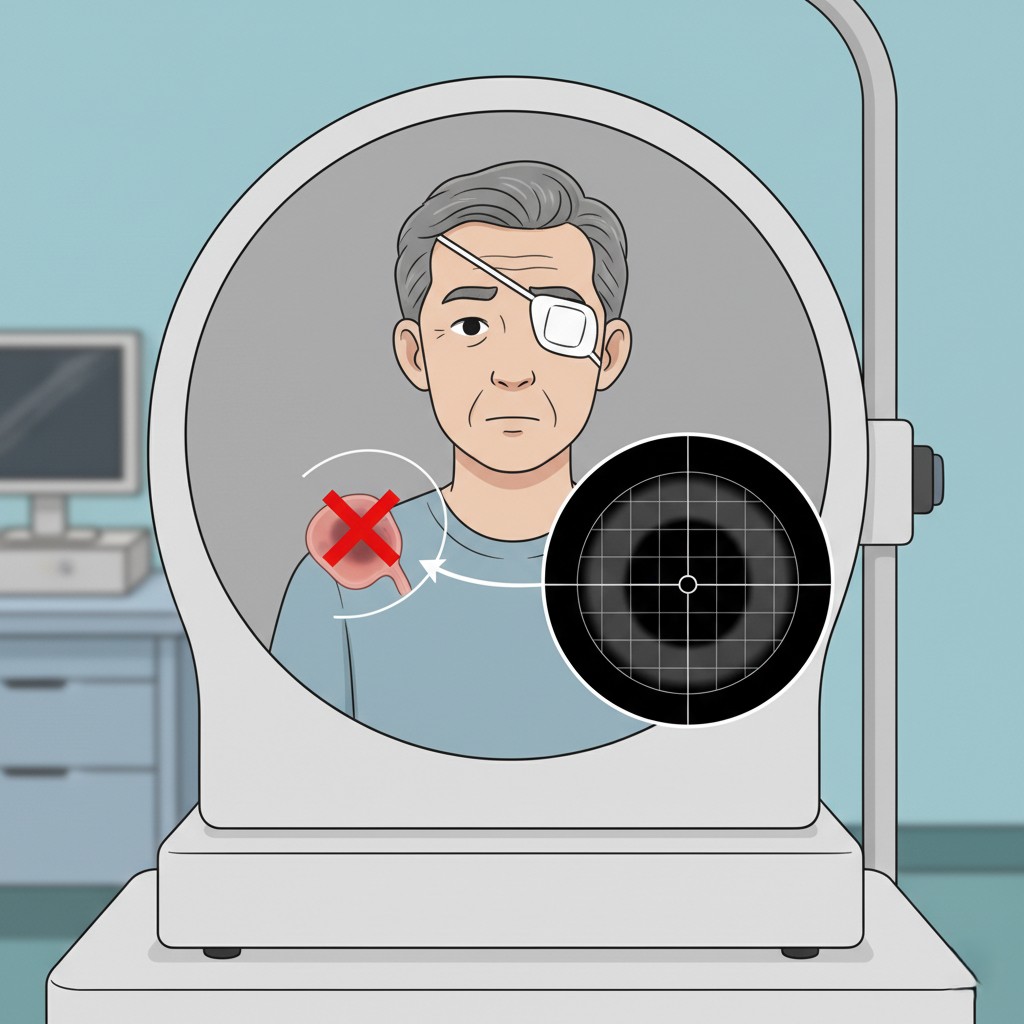
An arcuate (Bjerrum) scotoma follows the arching path of the retinal nerve fibers, typically curving around the central point of fixation and respecting the horizontal midline.
Pathophysiology and Anatomical Correlates
The distinctive shape of an arcuate scotoma is a direct reflection of the retinal anatomy. The axons of the retinal ganglion cells (the retinal nerve fiber layer) originating from the temporal retina must detour around the central fovea to reach the optic disc. They do so by arching superiorly and inferiorly in distinct bundles (the superior and inferior arcuate bundles).
These superior and inferior fiber bundles meet at the temporal horizontal raphe but do not cross it. Consequently, any focal lesion damaging one of these specific nerve fiber bundles at or near the optic nerve head will produce a corresponding arc-shaped visual field defect that stops sharply at the horizontal meridian.
Causes and Associated Conditions
The presence of an arcuate scotoma strongly suggests disease processes affecting the retinal nerve fiber layer or the optic nerve head. It is a highly localizing neuro-ophthalmologic sign. Recognized causes include:
- Glaucoma: This is the most classic and common cause. Glaucomatous damage typically begins at the superior and inferior poles of the optic nerve head, exactly where the vulnerable arcuate nerve fiber bundles enter, leading to early arcuate scotomas.
- Acute Ischemic Optic Neuropathy (AION): An ischemic event affecting the blood supply to the optic nerve head can damage focal bundles of nerve fibers, resulting in an altitudinal or arcuate defect.
- Optic Nerve Drusen: Calcified deposits within the optic nerve head can compress the entering arcuate nerve fibers.
- Branch Retinal Artery Occlusion (BRAO): An occlusion of an arteriole supplying an arcuate bundle in the retina can cause a corresponding field defect.
- Optic Neuritis: Inflammation of the optic nerve can occasionally present with arcuate field defects, though central scotomas are more common.
Cross References
Need Expert Advice on Your Condition?
Get a personalized video breakdown and treatment plan from our senior neurosurgeons using your MRI/CT scans.
👉 Request MRI Review