
Anteflexion
Definition and Clinical Presentation
Anteflexion is the abnormal forward flexion or bending of the trunk. In clinical neurology, it is most frequently observed as the characteristic stooped posture associated with extrapyramidal disorders. This abnormal posture shifts the patient's center of gravity forward, which often leads to compensatory mechanisms, such as taking rapid, short, shuffling steps to "catch up" with the center of gravity and prevent falling forwards (a phenomenon known as a festinating gait).
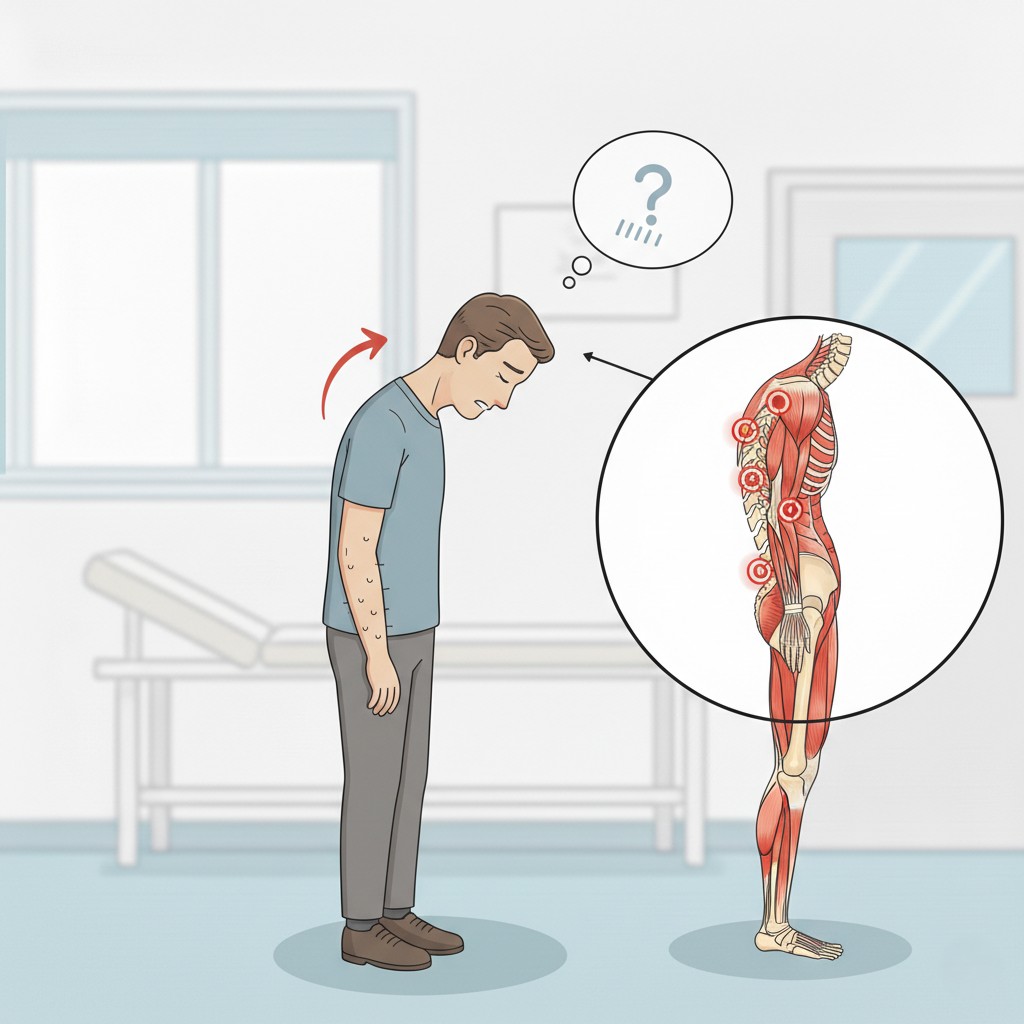
Anteflexion of the trunk contributes to the characteristic stooped posture and festinating gait frequently seen in Parkinson's disease.
Pathophysiology and Associated Conditions
The underlying mechanism of anteflexion typically involves a combination of axial rigidity, dystonia of the abdominal and truncal musculature, and an impairment of normal postural reflexes.
- Parkinson's Disease: A mild to moderate degree of anteflexion is a hallmark feature of advancing idiopathic Parkinson’s disease, contributing to the classic flexed posture of the neck, trunk, and limbs.
- Camptocormia: An extreme, involuntary forward flexion of the thoracolumbar spine (often bending more than 45 degrees) is known as camptocormia or "bent spine syndrome." A key clinical feature of camptocormia is that the severe anteflexion worsens while standing or walking but completely resolves when the patient lies flat (supine).
- Atypical Parkinsonian Syndromes: Prominent anteflexion can also be observed in disorders such as Multiple System Atrophy (MSA).
Cross References
Need Expert Advice on Your Condition?
Get a personalized video breakdown and treatment plan from our senior neurosurgeons using your MRI/CT scans.
👉 Request MRI Review