
Anserina
Definition and Clinical Features
Anserina, most formally known as cutis anserina (from the Latin cutis for skin, and anser for goose), is the medical term for what is commonly referred to as "goose bumps" or "goose pimples." It is characterized by cold, bumpy skin that resembles the plucked skin of a goose or poultry.
This phenomenon is an involuntary, sympathetically mediated reflex that produces simultaneous piloerection (the bristling of hairs) and localized thermoconstriction.
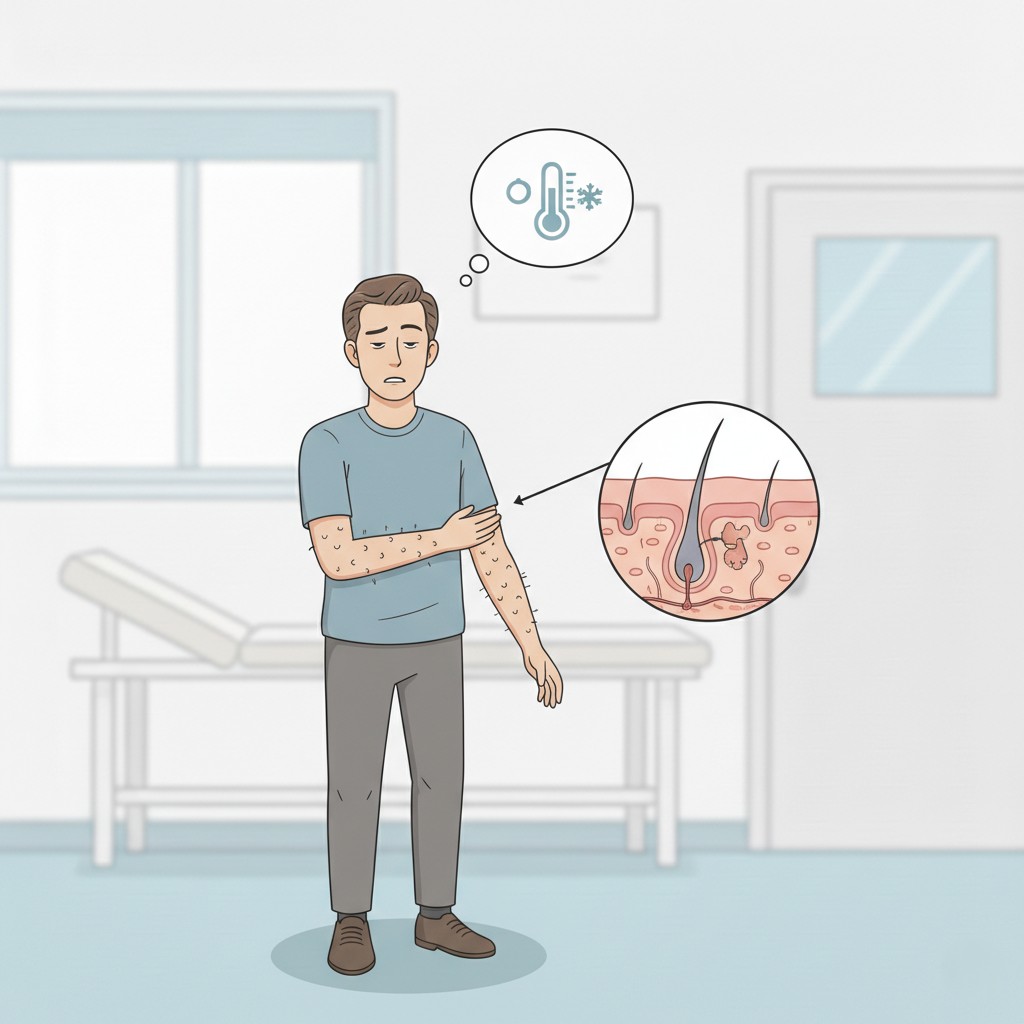
Cutis anserina, or "goose bumps," results from the sympathetic contraction of miniature arrector pili muscles attached to hair follicles.
Pathophysiology
The physiological basis of cutis anserina lies in the activation of the sympathetic nervous system. When the sympathetic nervous system is triggered (often part of the "fight-or-flight" response), it releases the neurotransmitter norepinephrine. This neurotransmitter binds to alpha-adrenergic receptors on the arrector pili muscles—tiny, smooth muscles attached to the base of each mammalian hair follicle.
The contraction of these muscles causes the hair to stand upright and pulls the skin around the follicle downward, elevating the surrounding area and creating the characteristic bumpy appearance. In highly-furred mammals, this reflex traps a layer of air for insulation or makes the animal appear larger to predators. In humans, who lack dense body hair, it is largely considered a vestigial reflex.
Clinical Significance and Associated Conditions
While most commonly a normal physiological response to cold temperatures or strong emotions (such as fear, awe, or euphoria), cutis anserina can hold clinical and neurological significance in several contexts:
- Opiate Withdrawal: Severe piloerection is a hallmark sign of the sympathetic hyperactivity seen during withdrawal from opioid medications or heroin (giving rise to the colloquial phrase "quitting cold turkey").
- Autonomic Dysreflexia: In patients with high spinal cord injuries (typically at or above the T6 level), a massive sympathetic discharge can occur in response to a stimulus below the level of injury (like a distended bladder). This medical emergency often presents with severe hypertension, sweating, and prominent cutis anserina above the level of the lesion.
- Pilomotor Seizures: Very rarely, recurrent, unilateral, or localized goose bumps can be the primary manifestation of a focal seizure, typically originating from the temporal lobe, amygdala, or insula.
- Horner's Syndrome: Because cutis anserina depends on intact sympathetic pathways, a patient with Horner's syndrome will demonstrate an absence of the reflex on the affected side of the body or face.
Cross References
Autonomic failure; Horner’s syndrome
Need Expert Advice on Your Condition?
Get a personalized video breakdown and treatment plan from our senior neurosurgeons using your MRI/CT scans.
👉 Request MRI Review